Prefatory Note on Assembly
What follows is a reconstruction from two sources: the ledger of the keeper of the kund — who recorded arrivals, departures, and the weight of mineral deposits left by each bather — and the field notes of the Thread Walker, who was present at the edge of the gathering but did not speak. The Thread Walker’s notes are reproduced in italics where they appear. The keeper’s ledger entries are marked with a line preceding them.
Neither source claims to be complete. The keeper recorded what was measurable. The Thread Walker recorded what she noticed. Between the two, something of the evening survives.
I. What Called Them
The kund had been used before — one bather at a time, sometimes two if their work did not touch the same water. The weaver had come to examine cloth. The dyer had come to test mordants. The cartographer had come to extend her maps of the upper gorges. But they had come separately, on different days, and the water had cooled between each visit.
The shepherd was the one who suggested it.
She had been watching the valley for months from a ridge above the tree line, noting which pastures were grazed, which lay fallow, which streams had shifted course since the last season. She kept a map in her head — not of paths, but of movements. Where the animals went. Where they avoided. What the avoidance meant.
“We are eleven,” she said to the keeper. “Each of us knows one meadow. None of us knows the range.”
The keeper — who had managed the kund since before anyone could remember when he had not — looked at her for a long time. He had never heated the water for eleven at once. He was not certain the basin would hold.
“The basin will hold,” he said finally, though he was not certain. “But the water will be different. Eleven bodies change the mineral balance.”
“That,” said the shepherd, “is the point.”
II. Arrivals
They came in the last light of the afternoon, when the cedar shadows were long on the stone steps and the temperature of the air had dropped enough that the steam from the kund was visible — a thing that happened only in the hour before dark.
The Thread Walker’s field notes, 27 Chaitra:
I counted them as they arrived. The keeper had set out eleven brass cups on the stone rim — one per bather, each cup different, each marked with a symbol I did not recognise. He told me later they were old trade marks: the weigher’s balance, the cartographer’s crossed lines, the dyer’s three drops, the shepherd’s crook. I asked about the cup with no mark. “That one is mine,” he said.
The first to arrive was the cartographer, who came from the north side of the gorge carrying instruments wrapped in oiled cloth. She set her pack on the stone terrace and sat beside it without speaking.
Then the weigher, who came from the evaluation house on the ridge where she spent her days testing the tensile strength of thread and the fastness of dyes. She carried nothing but a small notebook, its cover stained with reagents.
The dyer arrived next, from the gorge where the slate produces the mineral pigments that give Tirthan cloth its particular blue. He smelled of copper mordant and his fingers were indigo to the second knuckle.
Then in quick succession: the wine-grower from the south-facing terraces, the shopkeeper who had seen thirty years of trade pass through his counter, the storyteller who carried the valley’s genealogies in memory rather than in writing, the botanist who could name every medicinal herb between the river and the snow line, the old reader of the water — she who understood the kund’s mineral signatures better than anyone — the keeper of the photographic record, and the builder who had been working on the structures above the gorge.
The shepherd arrived last, as shepherds do. She had been walking since dawn. Her flock was pastured in the meadow below the kund, and you could hear the bells — a sound like water over small stones, which the keeper said he had learned to distinguish from actual water only after forty years.
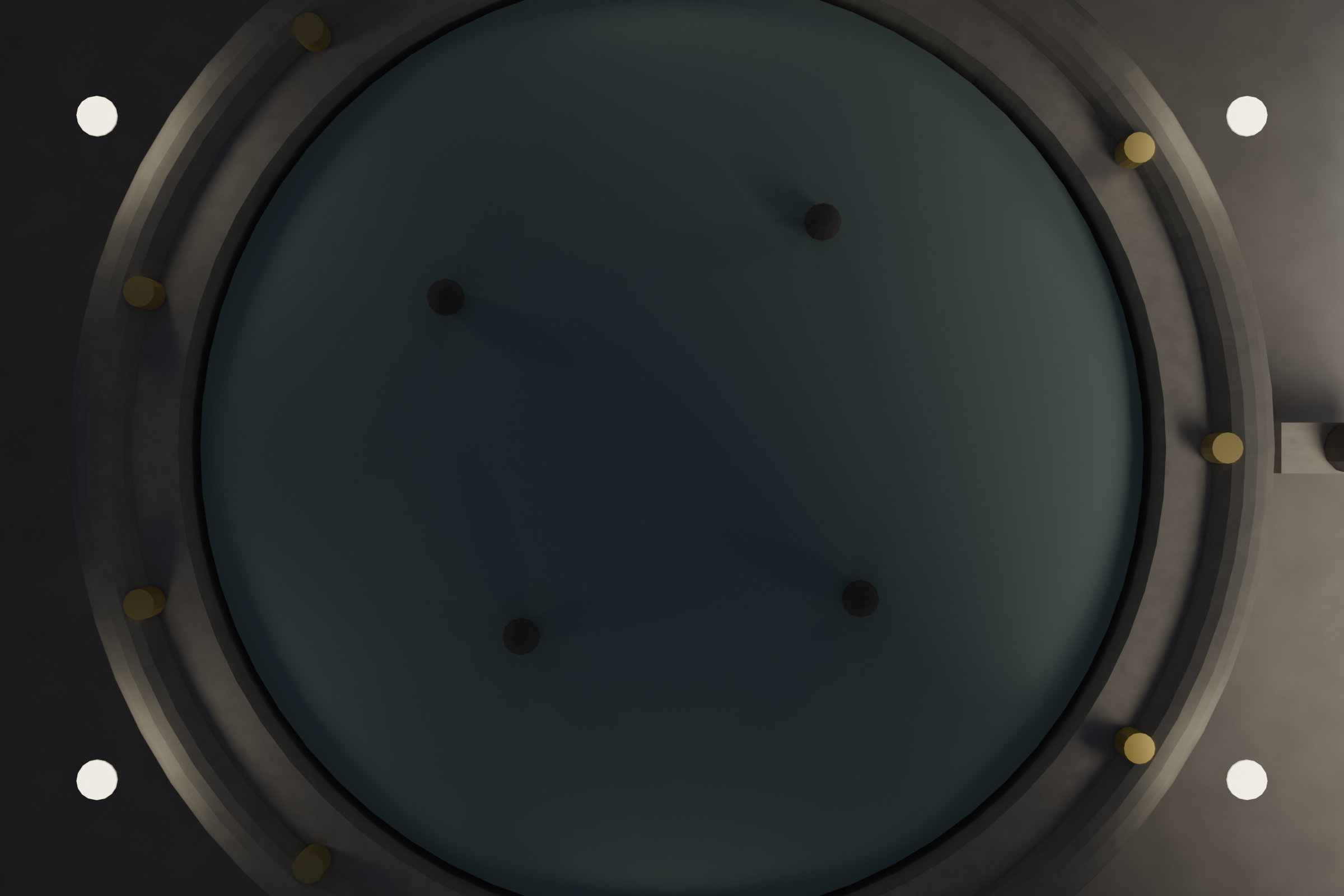
Eleven brass cups on the stone rim of the kund — each marked with a trade symbol the Thread Walker did not recognise. The keeper’s own cup bore no mark at all.
III. The First Wave
The keeper heated the water. This took longer than usual — the volume was larger, and he would not compromise the temperature. “If the water is not right,” he said, “the minerals do not release. If the minerals do not release, the bathers take nothing with them when they leave.”
While the water heated, the shepherd spoke.
“I have been watching from above,” she said. “I can tell you where the grass is good and where it is failing. I can tell you which paths are used and which have gone silent. But I cannot tell you what the silence means. The dyer knows his gorge. The wine-grower knows her terraces. The shopkeeper knows what people buy and what they have stopped buying. Each of you holds one view of the range. I am asking you to say what you see.”
She paused. The steam rose.
“Not what you think should be done. What you see.”
Keeper’s ledger, evening entry:
First immersion: all eleven, simultaneously. Duration: the time it takes to walk from the kund to the cedar grove and back. Water temperature at entry: correct. Deposits noted: heavy. Each bather released minerals from their own work — the dyer’s copper traces, the weigher’s calcium from chalk dust, the cartographer’s graphite from pencil lead worn into the hands. Combined effect: the water clouded, then cleared. The sediment pattern was unlike any single-bather deposit I have recorded. I will need to examine the basin stones in morning light.
Each bather spoke in turn, but not in the ordered way of a formal panchayat where the eldest speaks first and the youngest last. The shepherd had asked them to speak as the thought arrived — as a river finds its channels, not as a canal is dug.
The cartographer spoke of the upper reaches, where the trails had not been surveyed since the British maps of the 1870s and where the terrain was shifting in ways that made the old maps unreliable. “The gorge has narrowed by four metres since the last monsoon,” she said. “The old path is gone. A new one is forming, but it is not where you would expect.”
The shopkeeper spoke of the market — what travellers were asking for that had not been asked for before. “They come looking for something they cannot name,” he said. “They describe it by what it is not. Not a guest house. Not a trek. Not a photograph. Some kind of — " he paused, turning a brass weight in his fingers — “encounter with the place itself. As if the valley could be introduced to them, the way you would introduce a person.”
The wine-grower spoke of the terraces she had been planting on the south-facing slopes above the river — an experiment that had drawn skepticism from every quarter. “The soil is right,” she said. “The altitude is right. The light is right. What is missing is belief. No one here believes this valley can produce wine. That is a problem of imagination, not agriculture.”
The dyer spoke of his pigments and of the orders he received from outside the valley — orders that had doubled in the past year, all asking for the particular blue that could only be made from the slate in his gorge. “I cannot fill them,” he said simply. “One pair of hands. One gorge. The demand exceeds the method.”
The old reader of the water listened to each voice and said nothing until the first round was complete. Then: “The water remembers what each of you brought into it. After you leave, I will read the deposits. But I want you to know — " she looked at each of them in turn — “the deposits are not the same as the bathing.”
IV. Between the Waves
The keeper drained the basin and refilled it. This was unusual — in normal practice, the water was replenished gradually, the mineral balance maintained through slow dilution. But eleven bathers had saturated the water in a single immersion, and the keeper judged it better to begin fresh.
Thread Walker’s notes:
During the draining I walked the terrace. The shepherd was sitting apart from the others, on the low wall where the goatherds sit during festivals. She was not writing anything down. I asked if she was satisfied with the first round.
“Satisfied is the wrong word,” she said. “I heard eleven things I did not know. Three of them contradict each other. That is what I wanted.”
“What will you do with the contradictions?”
“Hold them. Contradictions are how you know you are looking at something real. A map with no contradictions is a map of a place that does not exist.”
While the basin refilled, the storyteller approached the shopkeeper. They spoke quietly — I could not hear the words, but I saw the shopkeeper take something from his pocket and show it to the storyteller, who held it up to the failing light and turned it over several times. Later the storyteller told me it was a chip of slate from the dyer’s gorge — the shopkeeper had been carrying it for weeks, trying to understand why the blue it produced was different from every other blue he had seen in thirty years of trade.
The weigher and the cartographer were comparing notebooks. The weigher’s was small and dense with numbers. The cartographer’s was large and covered with sketches — profiles of ridgelines, cross-sections of gorges, elevation marks in a notation I had not seen before. They were, I realised, looking at the same valley from two angles that had never been aligned.
V. The Second Wave
They entered the water again. The second immersion was different — the keeper said later that the mineral balance was not the same, because the first wave had changed the bathers. “They carried traces of each other’s work now,” he said. “The dyer had heard the shopkeeper. The shopkeeper had seen the cartographer’s maps. The water they brought into the second basin was not the water they would have brought had the first immersion never happened.”
This time the shepherd asked a different question.
“In the first wave I asked what you see. Now I ask: what do you see together that none of you sees alone?”
The botanist spoke first this time — she who had been silent in the first round, listening with the attention of someone who identifies plants by the sound of wind through their leaves rather than by sight alone.
“The dyer needs the slate from the gorge. The cartographer says the gorge is narrowing. The shopkeeper says people want an encounter with the place. The wine-grower says the soil is right but the imagination is wrong.” She paused. “These are not separate problems. The gorge, the terraces, the market — they are one watershed. What happens at the ridge line reaches the river. What reaches the river shapes what the shopkeeper sees.”
The builder, who had also been quiet, said: “The structures I build above the gorge — the kath-kuni houses with stone and timber in alternating courses — they are made to hold earthquakes. Each layer holds the other. Stone alone would crack. Timber alone would burn. It is the alternation that survives. What I hear in this basin is eleven materials. The question is the alternation.”
The storyteller said: “I keep the genealogies. Every family in this valley is connected to every other family within five generations. When someone asks me ‘who is this person,’ the answer is never a name. It is a web of relations. What you are describing — the gorge, the terraces, the market, the structures — that is also a genealogy. The valley’s trades are related to each other the way its families are. Pull one thread and six looms feel it.”
Keeper’s ledger:
Second immersion complete. Duration: twice the first. Water temperature at exit: 3 degrees below entry. Deposits: lighter than first wave but more complex. First wave deposits were individual — each bather’s characteristic minerals identifiable. Second wave deposits are compounded. I find traces that belong to no single bather. Either the bathers have exchanged minerals through proximity, or the water has catalysed new combinations. I lack the instruments to distinguish these. Will consult the weigher in morning light.
VI. The Four Who Stayed
After the second wave, seven of the eleven left the basin. The cartographer had her gorge measurements to finish before the light failed entirely. The botanist had specimens to press. The old reader of the water said she would return when the keeper had finished his analysis — “I read water, not conversation.” The builder, the wine-grower, the keeper of photographs, and the water-reader descended the stone steps in the last of the twilight, each carrying what they had heard but no longer adding to it.
Four remained in the basin: the shopkeeper, the storyteller, the dyer, and the weigher. The keeper noted this in his ledger — the first time in his records that a subset of bathers had continued after others departed. “The mineral balance changed again,” he wrote. “Lighter. More specific.”
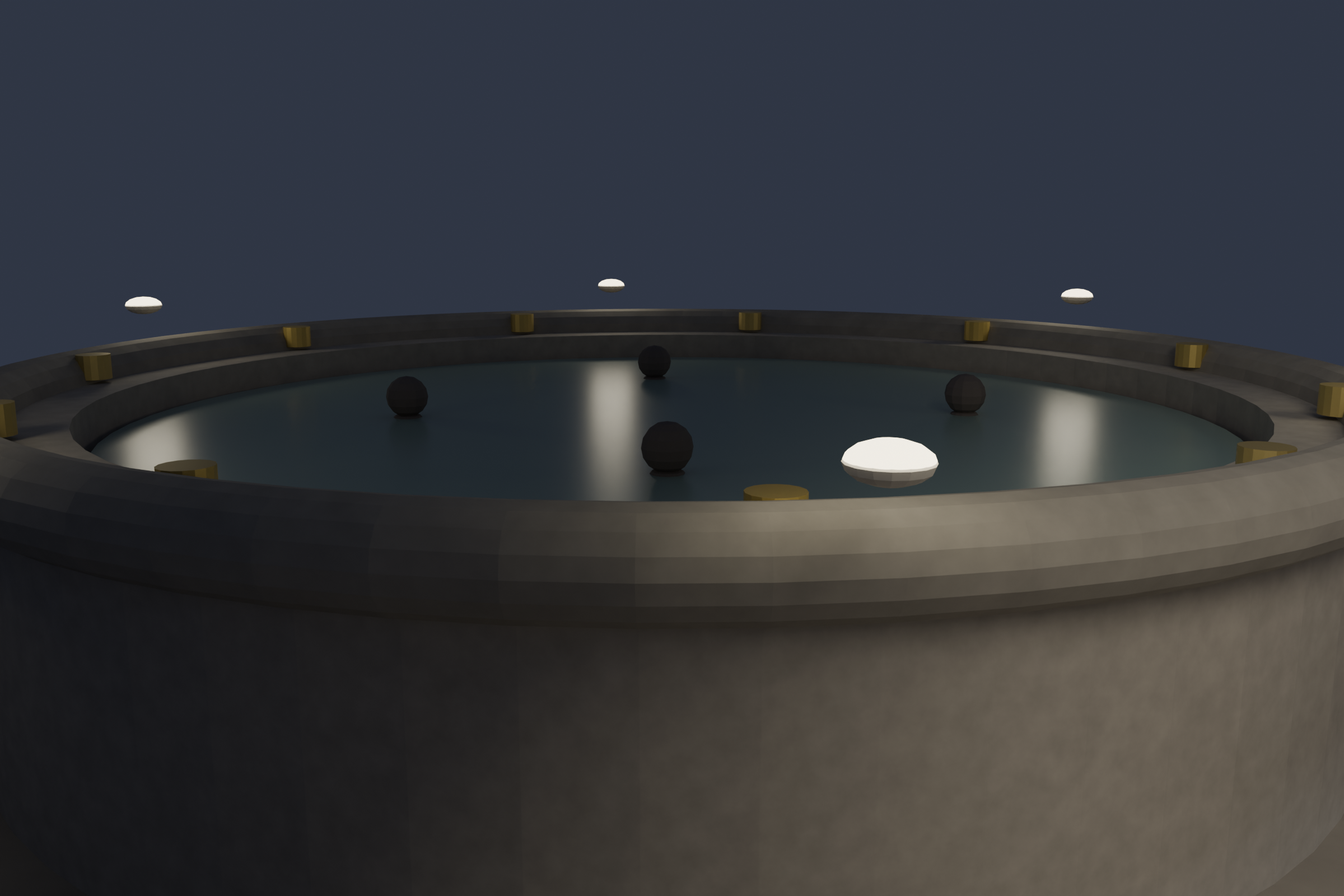
The basin after dark. Four figures still in the water, stone lamps casting half-light from carved soapstone niches. The shepherd sits on the low wall above them — listening, not speaking.
These four spoke differently now. In the first wave they had testified — each presenting their own ground. In the second they had combined — seeing the watershed as one system. In the third they argued.
The shopkeeper proposed a market anchored to the terrain itself. “The cartographer’s maps. The keeper of photographs' images. My counter. The dyer’s gorge. What if the traveller could walk through the valley before arriving — see the keeper’s face, the path to the homestay, the honey still in the comb — and book a bed or buy a jar of apricot preserve from the same surface? Every keeper in this valley has goods and no means to show them beyond a hand-lettered sign on the road. We could change that with what already exists in this room.”
The dyer calculated aloud: fifty keepers, a small fee per month for the shopfront, a share of each transaction. “The keeper’s alternative is zero,” he said. “Even modest traffic converts.”
But the storyteller shook his head. He had been quiet through the second wave, listening with the patience of someone who has memorised a thousand genealogies and knows that the interesting part is never the name but the relation between names.
“I am not picking my own cloth,” he said. “I am picking the one that ships.”
The basin went still.
“The terrain market is the best idea in this room. It is also the worst first product. It requires the cartographer’s maps to be transactable. It requires the keepers — who use only their voices and their hands — to adopt a system they have never seen. It requires a payment mechanism we do not have. We would be building for people who are not in this basin, using capabilities that do not yet exist.”
He paused. “I have a stall. It is small. It works for one person. But everything it does — the conversation, the presentation, the matching of skill to need — could work for anyone whose trade does not fit on a single page. I have counted fifteen stalls in the towns across the river that do what mine does, badly. None of them can read a craftsman’s actual work. I can. The distance between my stall and a stall that serves others is shorter than the distance between the shopkeeper’s vision and a working market.”
The weigher, who had been turning a brass weight in her fingers, said: “The storyteller’s stall funds the shopkeeper’s market. Build the small thing that sells. Use the revenue to build the large thing that matters.”
VII. What the Shepherd Heard
The gathering continued past dark. The keeper lit the stone lamps — tallow in carved soapstone bowls, each one set into a niche in the kund’s retaining wall at a height calculated, he told me, to cast light on the water’s surface without illuminating the bathers’ faces. “They speak more honestly in half-light,” he said.
Thread Walker’s notes, late entry:
The shepherd sat at the edge of the basin throughout all three waves. She did not speak during the third wave — she had asked the questions; the answers were not hers to shape. But she stayed. She heard the shopkeeper’s terrain market and the storyteller’s counter-proposal. She heard the weigher’s bridge between them.
I asked her later what she had heard.
“Eleven streams entering one basin,” she said. “Seven of them gave their water and left. Four stayed and the water changed a second time. That is how a panchayat works. Everyone testifies. The sustained conversation is between those with the most at stake.”
“And the argument — the terrain market versus the storyteller’s stall?”
“That is not an argument. That is a sequence. The storyteller is right that you build the small thing first. The shopkeeper is right that the valley is the larger prize. The weigher is right that the first funds the second. Three people saying the same thing from three directions — that is not contradiction. That is triangulation.”
She looked out at the dark valley below, where the Tirthan was audible but invisible.
“The only voice I did not hear tonight was the valley’s. The keepers were not in the basin. Paras Ram was not here. Inder Singh was not here. When we next gather, they must be.”
VIII. What Remained
The next morning the keeper drained the basin and examined the stones. He found three distinct layers of deposit.
The first layer — broad, shallow, identifiable — came from the eleven. Each bather’s characteristic minerals were legible: the dyer’s copper traces, the weigher’s calcium from chalk dust, the cartographer’s graphite from pencil lead worn into the hands, traces of tannin from the wine-grower’s stained palms, a blue residue that could only have come from the dyer. Eleven signatures, each distinct.
The second layer was different. It appeared only where the first-wave deposits overlapped — a compound the keeper could not attribute to any single bather. He had seen faint versions of this in two-person sessions but never at this density. “Eleven minerals reacting in the same water,” he wrote. “The combinations exceed what I can catalogue.”
The third layer surprised him. It was concentrated in one quadrant of the basin — the area where the four who stayed had continued into the late hours. It was thinner than the broad layer but more complex in structure, with crystalline patterns that the keeper had never recorded. “The four who stayed deposited differently from the eleven who testified,” he wrote. “Their minerals had been through three waters. They carried traces of each other’s traces. The deposit is not additive — it is recursive.”
He scraped samples into three glass vials and set them on the shelf. The first he labelled with the date and eleven marks. The second he labelled with the date and the word compound. The third he labelled with the date and four marks — the shopkeeper’s coin, the storyteller’s spiral, the dyer’s three drops, the weigher’s balance — and beneath them, in smaller script: third water.

Cross-section of the basin stone, morning light. Three layers visible: the broad eleven-mark deposit at the base, the compound layer where minerals reacted in shared water, and the thin crystalline third-water deposit concentrated in one quadrant.
Thread Walker’s final note on this gathering:
The shepherd left before dawn. I found her flock already moving up-valley, the bells receding into the mist that settles between the deodar at that hour. She had left a message with the keeper — a single sentence, scratched on a piece of slate in the handwriting of someone accustomed to writing on rock:
We will do this again when the pastures turn.
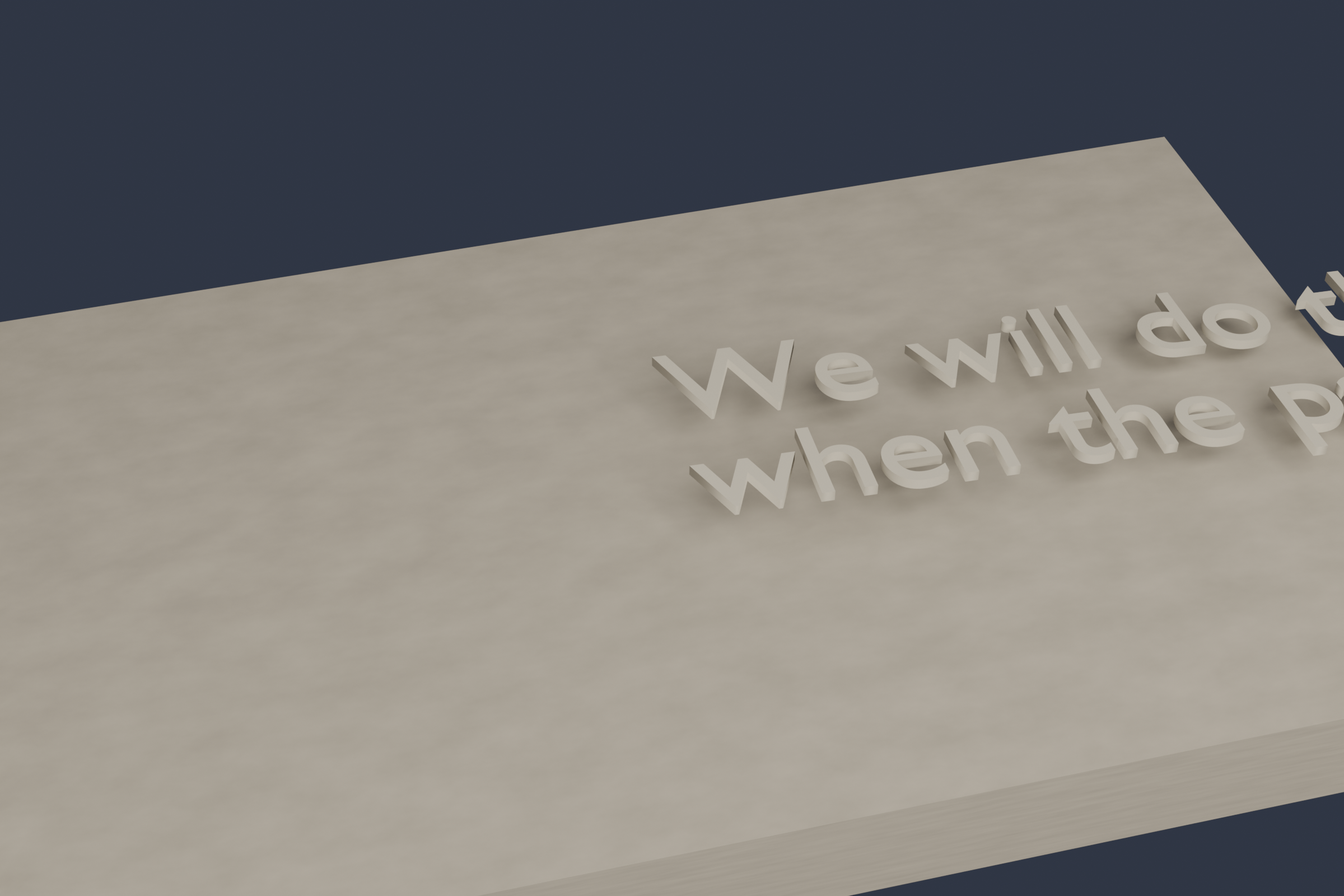
The shepherd’s message, scratched on a piece of slate in the handwriting of someone accustomed to writing on rock. Found by the keeper on the rim of the basin at dawn.
Not a request. Not a plan. A statement of fact, the way a shepherd states the weather: not because she controls it, but because she has learned to read what is coming.
I asked the keeper whether the kund would hold eleven bathers a second time.
“The kund held,” he said. “The question is whether I have enough brass cups. I may need to commission more.”
He was smiling when he said this. I have known the keeper for many seasons. He does not smile often.
Then he said something I did not expect:
“The interesting deposit is not the eleven. It is the four. Eleven voices is a census. Four voices arguing past midnight — that is where the new mineral forms.”
Colophon
This account was assembled from the keeper’s ledger (pages 447–453, evening and morning of 27–28 Chaitra) and the Thread Walker’s field notes (notebook XII, entries 93–101). The keeper’s shorthand in the third-wave entries has not been fully deciphered; a more complete account may emerge when the weigher, who can read his notation, next visits the kund.
Three vials from the first sabhā are stored on the third shelf: #1147 (eleven-mark, broad deposit), #1148 (compound, second water), and #1149 (four-mark, third water). The keeper notes that #1149 is the smallest sample but the one he returns to most often. “I keep holding it up to the lamp,” he wrote the following week. “The crystalline structure is unlike anything in the single-bather archive. I believe it is a new mineral. I do not yet have a name for it.”
One further note. The keeper records that during the sabhā, one of the bathers entered the water under a name that was not her own. “She bathed as the builder,” he writes, “but her deposits were unmistakably those of the keeper of photographs — silver halide, notite. I said nothing. The water knew who she was, even if she did not.”
Neither the Thread Walker nor the keeper claims this record is complete. The Thread Walker was outside the basin — she heard what was said, but not what the water carried. The keeper’s instruments are calibrated for single deposits, not compounds. Between the two accounts, something of the evening survives. What remains in the water, neither of them can say.