A Note on the Terrace at Thalpan#
At the confluence of the Indus and the Gilgit rivers, where the gorge narrows to twenty-one kilometres between the river at eleven hundred metres and the summit at eight thousand one hundred and twenty-five, a series of rock terraces face the water. The terraces at Thalpan hold the densest concentration of petroglyphs in the upper Indus — more than thirty thousand carvings and five thousand inscriptions spanning ten millennia. Ten writing systems have been identified: Kharoshthi, Brahmi, Proto-Sharada, Sogdian, Bactrian, Parthian, Chinese, Tibetan, Middle Persian, and a disputed Hebrew inscription. Each script was carved by someone who had come a long way and would not stay.
The geologists note that the rock here is dark — Kohistan island arc basalt, Cretaceous oceanic volcanic rock caught between colliding continents fifty million years ago. But walk upstream, and the rock lightens. Indian plate gneiss surfaces — pale, banded, the oldest basement rock in the region. Two continents meet beneath your feet. The people who carved the terraces did not notice the boundary. The ibex does not notice it either.
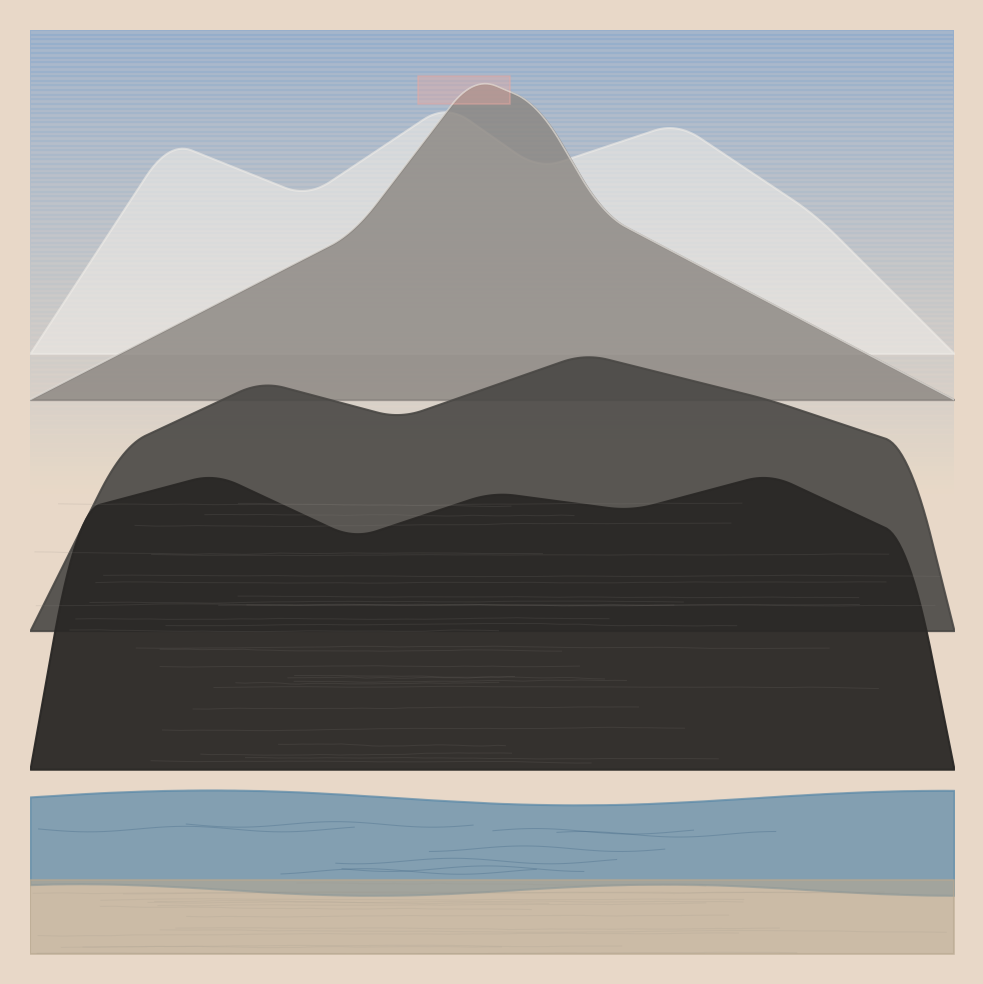
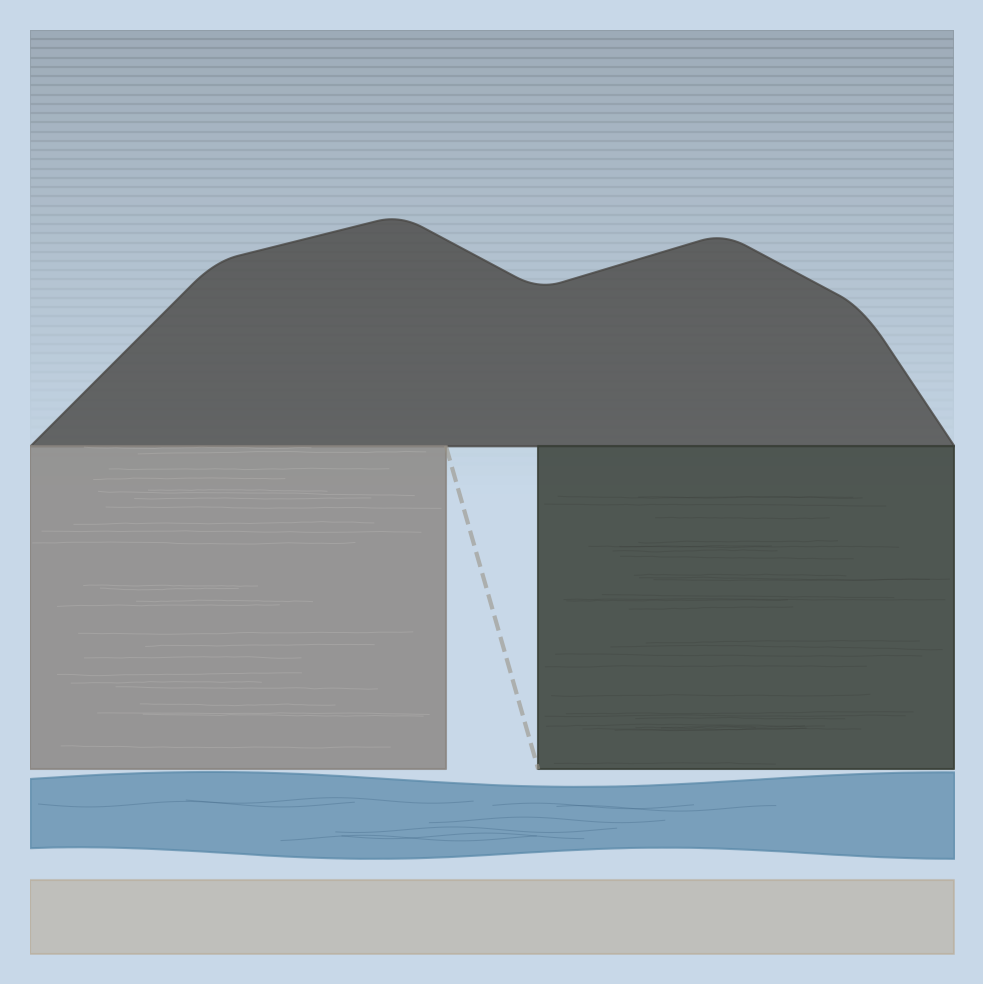
The gorge at first light. The Indus below, Nanga Parbat above. Between them, the terrace where everything was written.
The survey man from Heidelberg counted them for thirty years — Karl Jettmar, then Ditte Bandini-König after him, then their students. Thirty thousand petroglyphs. Five thousand inscriptions. Thirteen volumes of the Materialien zur Archäologie der Nordgebiete Pakistans. Every mark catalogued, photographed, and measured.
But the ibex on the cliff above the terrace was there before any of them. It stands where it stood when the first carver picked up a stone and struck the rock eight thousand years ago. The same species. The same cliff. The carved ibex and the living ibex, separated only by the medium.
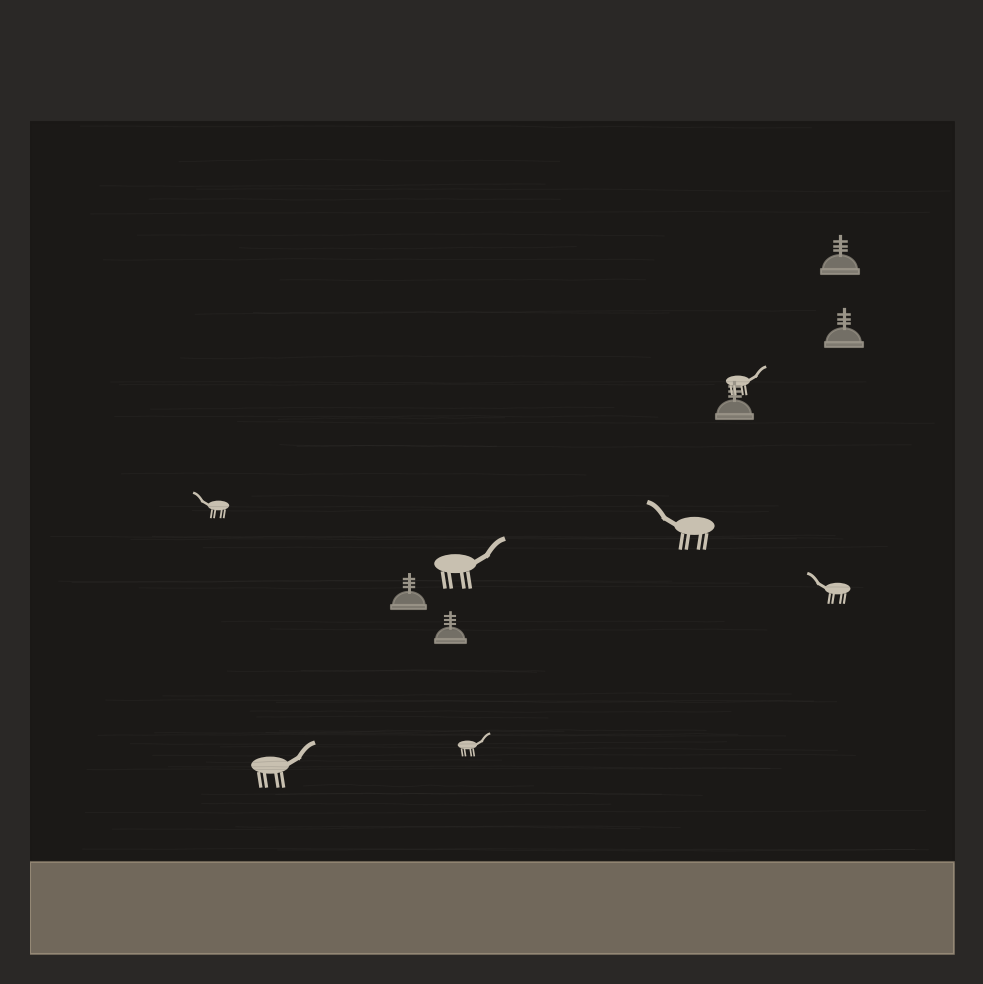
The terrace at Thalpan. Ibex and stupas crowd the rock face — some carved three thousand years apart, none erasing what came before.
The density is what strikes you first. Not a gallery — a palimpsest. A Gandharan traveller carved a stupa beside a hunting scene that was already ancient when he arrived. A Sogdian merchant scratched his name across an ibex without scratching it out. The rock accumulates. It does not erase.
Thirty sites on a hundred kilometres of river. At Shatial Bridge alone: five hundred and sixty-five Sogdian inscriptions. At Oshibat: five thousand caprid drawings, of which only four percent are Buddhist. The pre-Buddhist layer is vast and patient. It was here first and it persists.
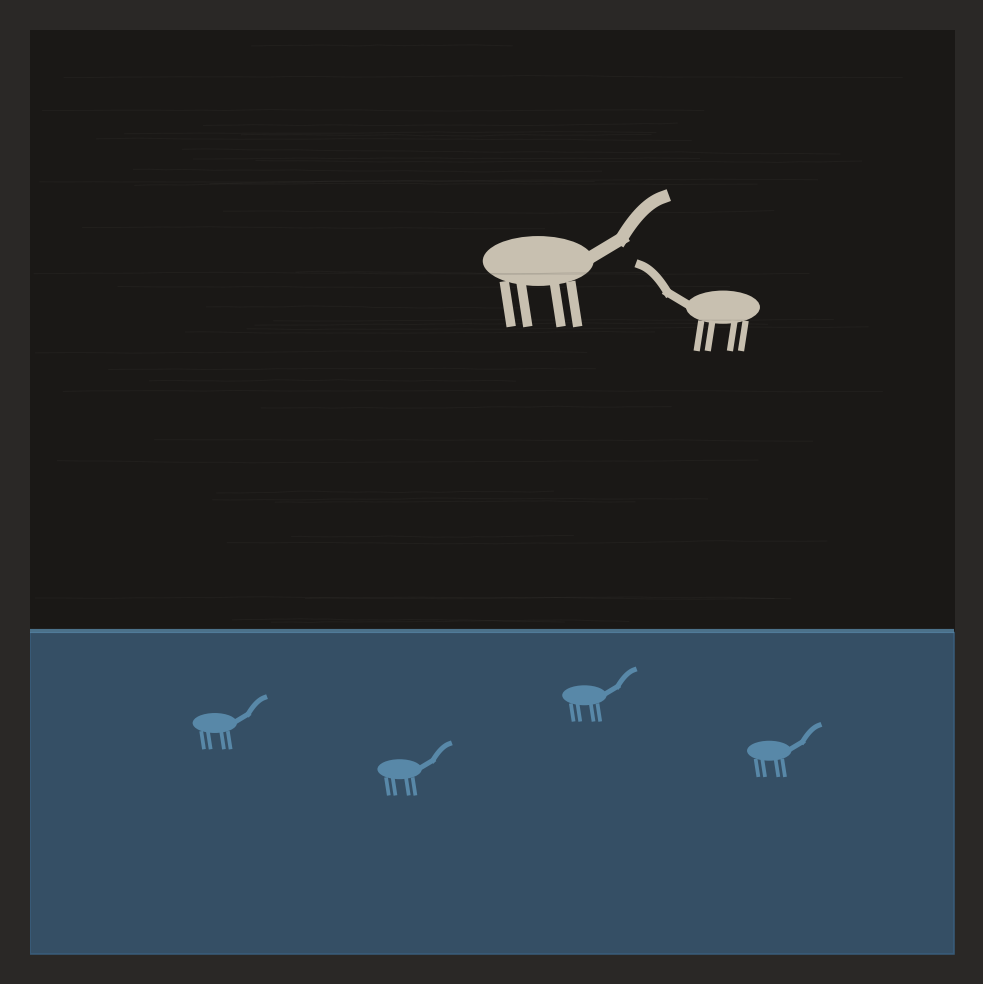
A single ibex. Eight thousand years old. The horns are still sharp.
Capra sibirica sakeen. The Himalayan ibex. Depicted more than any other animal in the Thalpan corpus. Horns placed on graves in pre-Islamic Dardic religion. The same animal carved on the rock and standing on the cliff and buried in the earth — three registers of the same creature, none of them the creature itself.
The Thread Walker noted this in her field book: The carving is not a picture of the ibex. It is a mark left by someone who had seen the ibex. The difference matters. The mark carries the seeing, not the seen.
A Buddhist stupa carved around an ibex that was already ancient. The newer does not replace the older. It frames it.
This is the Altar Rock. A Jataka scene surrounds petroglyphs that predate Buddhism in the valley by millennia. The carver did not chip away the ibex to make room for the Buddha’s temptation. He carved around it.
The Thread Walker sat before the Altar Rock for a long time. She wrote: Ten scripts. Ten civilisations. Each one carved its understanding into the same surface, and not one of them erased the others. The rock has room. The rock always has room.
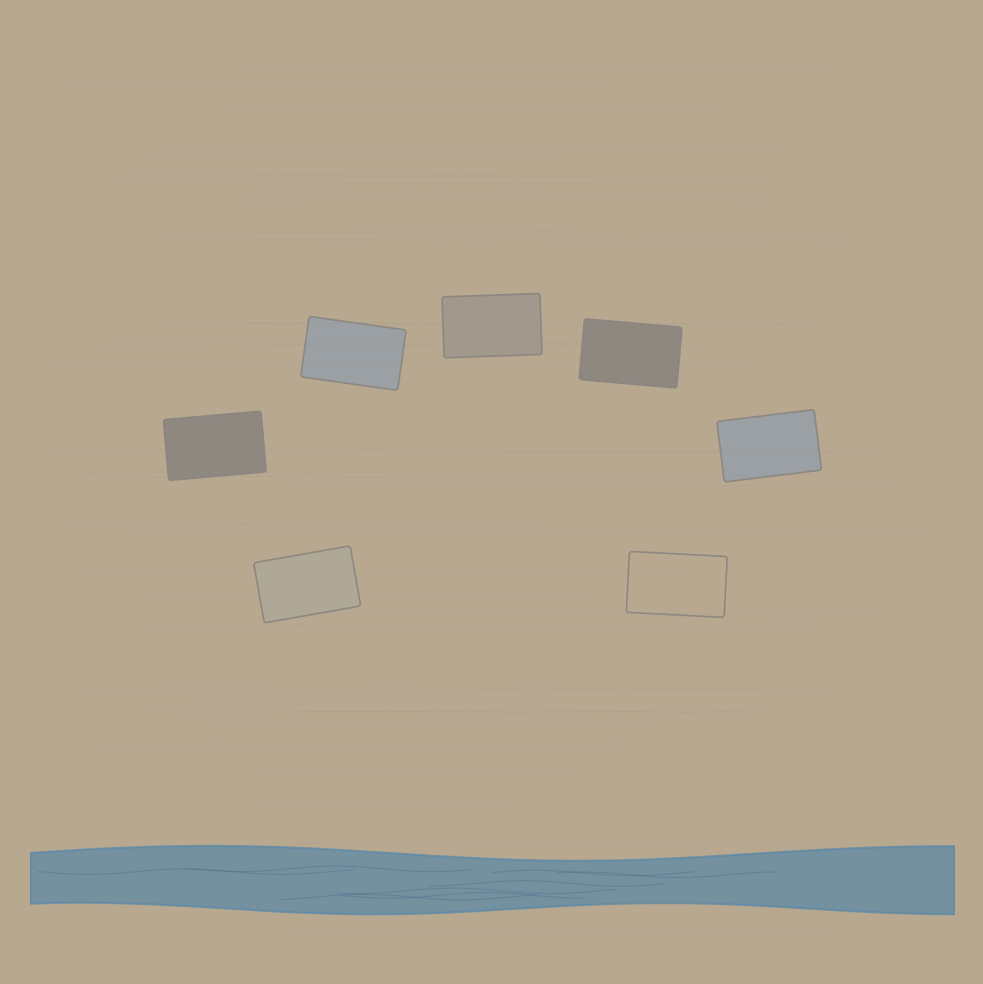
Seven flat stones laid in a loose semicircle on the terrace, facing the river. Someone had been here recently.
They were not ancient. The patina was fresh — months, not millennia. Each stone was flat, palm-sized, and covered in marks. But the marks were not petroglyphs. They were finer, more varied. Each stone had a different character.
The Thread Walker counted them. Seven. She arranged them in the order she found them, from left to right, the river below.
The first stone. Dense with marks — layer upon layer, structured, self-aware. An architect’s map of something large.
The densest of the seven. Marks covered nearly every surface, organised in horizontal bands with vertical annotations. Whoever made this had seen something complex and attempted to capture not just the shape but the reasoning behind the shape.
The Thread Walker examined it for some time. She wrote: This one knows that a map is a compression. It notes what was compressed and what was lost. It even marks the places where the map might be wrong. An unusual kind of honesty for a cartographer.
The second stone. Fewer marks, precisely placed. A taxonomist’s inventory — everything named, everything in its category.
Structured but sparser. Where the first stone had layers, this one had columns. Names, categories, a visible ordering principle. But when the Thread Walker turned it over, she found a single mark on the reverse that the taxonomist had not categorised: a question.
What question is this an answer to?
The taxonomist had catalogued everything except the purpose.
The third stone. Ten marks where the others had sixty. Each one deep, confident, placed to bear weight.
The tersest of the seven. But each mark was cut deeper than those on the other stones — not scratched but incised. These were not notes. They were foundations.
The Thread Walker weighed this stone in her hand. It was the lightest, but its marks were the heaviest. She wrote: The builder does not describe what she will build. She drives the first peg.
The fourth stone. Curved marks, circular — like someone drawing the shape of a thought before knowing what the thought contains.
Where the others wrote in lines, this one wrote in arcs. The marks curved and returned to their starting points, as if the maker were testing whether an idea could close — whether it could hold itself without external support.
Portability, the Thread Walker wrote. This one cares whether the marks will mean the same thing on a different terrace, in a different valley, under a different sky.
The fifth stone. Gridded, analytical — a map of maps. The cartographer mapping her own cartography.
This stone had an underlying grid — faint horizontal lines that the marks sat upon, like a surveyor’s baseline. Everything was measured against something. The marks were dense but orderly, and several of them appeared to reference other marks on the same surface.
The Thread Walker recognised this pattern. A self-referential document. The cartographer reading her own previous survey and annotating the margins. She knows what she wrote and she knows what she missed.
The sixth stone. Marks grouped in tiers — three layers of inspection. An auditor who checked the work before passing it on.
Three distinct bands, each internally coherent. The first band: a structural inventory. The second: an assessment of what worked and what did not. The third: a list of unresolved questions, each tied to a specific mark in the first band.
The inspector does not build, the Thread Walker wrote. The inspector asks whether the building will stand. A different kind of knowledge. Equally necessary.
The seventh stone. Mostly empty. The marks that exist are tentative — questions, not assertions. Dots where the others drew lines.
The lightest marks of all. Dots, half-formed curves, a few short lines that trailed off before reaching any conclusion. This was not ignorance. The Thread Walker had seen this before — someone who arrives knowing they do not yet know enough to make strong marks.
Seventy percent, was scratched faintly at the edge. A self-assessment. The newcomer grading her own orientation. An unusual and honest act.
A reader arrives. She picks up a stone that is not her own. The builder reads the inspector’s map.
The Thread Walker found the evidence the next morning. Someone had rearranged the stones. Two pairs had been placed side by side — the reader’s own stone next to the stone she had studied. The marks on the borrowed stone were unchanged. But the reader had left something: a small additional mark on her own stone, in the style of the one she had borrowed.
She did not add to the map. She changed how she makes maps.
The inspector’s stone read by the builder. The tiered audit absorbed into ten foundational marks. What was three layers became one.
The builder’s stone, after the reading, had not gained many new marks. But the ten that were there had shifted. They were organised differently — no longer a foundation alone but a foundation with load-bearing walls already implied.
The Thread Walker measured the change. The builder read three tiers of inspection and extracted from them not information but structure. She did not learn what the inspector knew. She learned how the inspector organised what she knew. And she built with that.
The cartographer’s stone read by the newcomer. The densest map given to the most uncertain reader. And it worked.
This was the pairing that surprised the Thread Walker. The newcomer’s stone — previously seventy percent empty — had filled. Not with the cartographer’s marks copied, but with the newcomer’s own marks, now confident enough to form complete lines instead of trailing dots.
The quality of the map mattered more than the skill of the reader. She underlined this twice. Given a better map, the uncertain reader found her bearings. Given her own poor map, she wandered. The map is not a supplement to the reader. The map is the terrain the reader walks on.
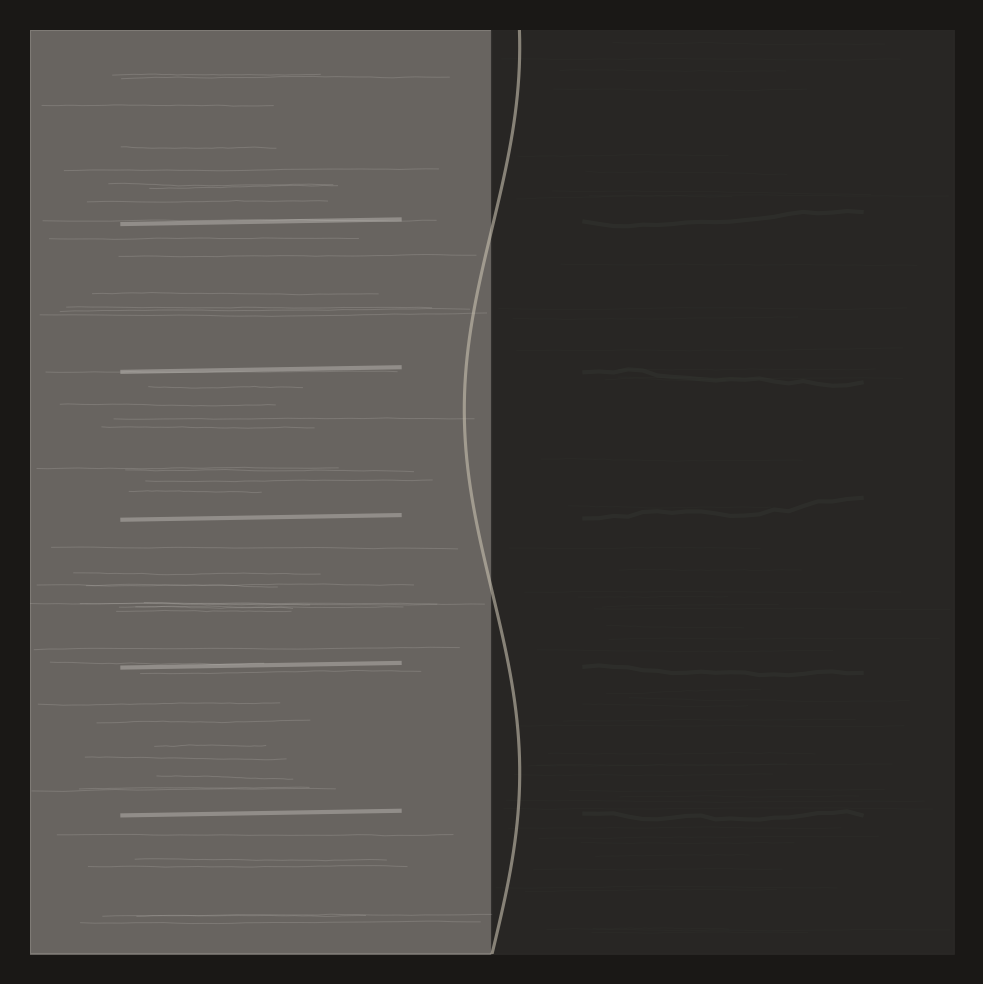
The gorge at midday. The shadows retreat and the rock reveals itself: two colours, two continents, meeting in a jagged line.
By noon the light was direct and the terrace showed what dawn had hidden. The left wall of the gorge was pale — banded gneiss, horizontal foliation, Indian plate basement rock. The right wall was dark — fine-grained, greenish-black, the Kohistan island arc. Cretaceous ocean floor caught between colliding continents.
The boundary ran through the gorge like a scar. The geologists call it the Main Mantle Thrust. The people who carved the terraces called it nothing. They did not notice it. The ibex does not notice it. The river does not notice it. Only the rock knows where one continent ends and another begins.
Two kinds of rock. Pale Indian gneiss on the left, dark Kohistan arc basalt on the right. The contact is jagged — not a clean break but a slow, violent embrace.
The Thread Walker pressed her palm against the contact. On one side: rock that had been part of India since the Archean, two billion years old, carried north at fifteen centimetres a year through the late Cretaceous. On the other: rock that had formed on an ocean floor, in an island arc like the modern Marianas, then been caught and crushed as India arrived.
Two substrates. Different origins, different compositions, different histories. But the river cuts through both, and the ibex stands on both, and the carvings cover both. The boundary is real. The life above it is continuous.
She thought about the seven stones. Seven different marks. Seven different ways of seeing. One terrace.
The symbol drowns. The animal climbs.
The Diamer-Basha Dam, when it fills, will submerge fifty thousand rock carvings. Five thousand inscriptions. Ten writing systems. The Altar Rock. The Jataka scenes. The Sogdian merchants’ names. The ibex that was carved eight thousand years ago.
But the ibex on the cliff above — Capra sibirica sakeen, the Himalayan ibex, the same species, the same horns — will climb higher. It always does. What is carved in behaviour cannot be drowned.
The Thread Walker wrote this and then crossed it out and wrote it again: The map is not the territory. But the territory is not the map, either. The ibex is not its carving. The carving is not the ibex. And when the water rises, only one of them will walk away.
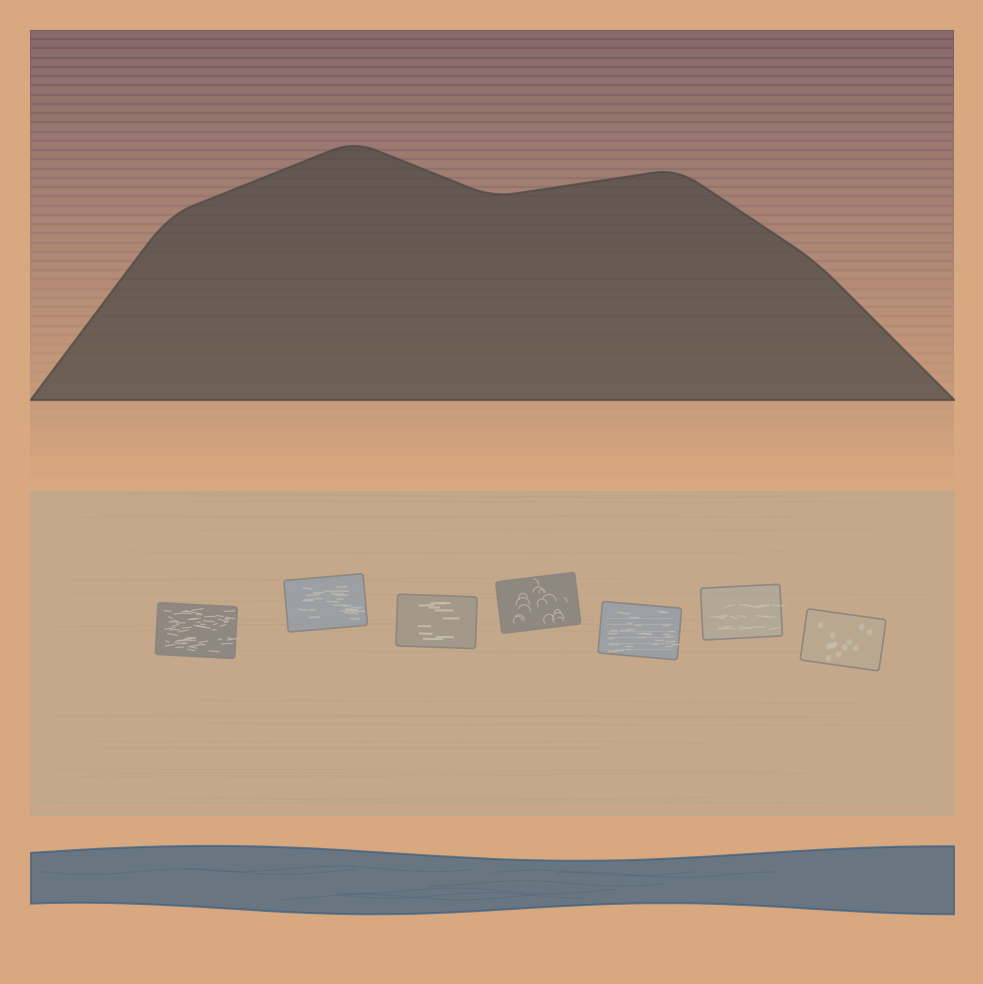
Dusk on the terrace. All seven stones gathered. The river darkens below. The findings settle into the rock.
By evening the Thread Walker had understood what the seven stones told her. Not what was written on them — she could not read the marks — but what the pattern of seven different handwritings on seven different stones, and the evidence of cross-reading, revealed.
The marks carry the character of the maker, not just the content. The architect’s stone makes the reader an architect. The builder’s stone makes the reader a builder. The inspector’s stone, given to the builder, makes a builder who inspects. What transfers is not information but cognitive style.
And the strongest finding: the newcomer, given the cartographer’s dense and careful map, oriented herself. Given her own uncertain marks, she could not. The quality of the notes determined the quality of the reading. Not the intelligence of the reader. The notes.
Seven maps. Seven readings. Three cross-readings. One terrace. One river. One mountain that builds itself.
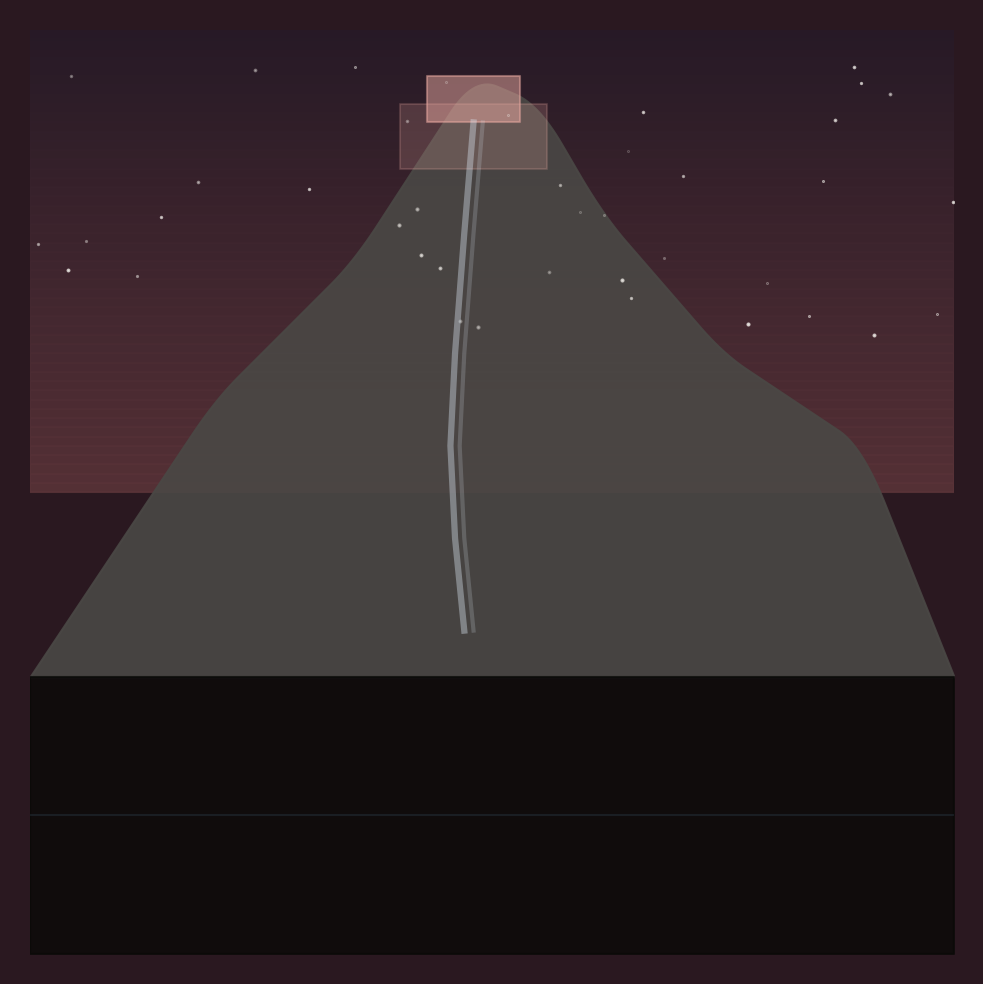
Nanga Parbat at last light. The mountain that builds itself. Decompression melting — rock rising so fast it crosses the melting curve. Still becoming.
The mountain is not finished. Seven millimetres per year, accelerating. The youngest exposed granite on Earth: leucogranite dikes crystallised less than a million years ago, born of rock rising so fast that pressure drops below the melting curve. The tectonic aneurysm: erosion drives uplift drives erosion. A feedback loop that has been running for five million years and shows no sign of stopping.
The Thread Walker watched the alpenglow fade from the summit. She wrote the last entry of the day:
Seven readers. Seven maps. Three exchanges. The same terrace where ten civilisations wrote their understanding into the same rock over ten thousand years. Not one of them erased the others. The rock has room. The rock always has room.
And above the waterline, the ibex climbs.
The petroglyph data in this narrative draws on the Pak-German Archaeological Mission’s thirty-year documentation of the upper Indus (Jettmar, Hauptmann, Bandini-König, 1980–2010), published as Materialien zur Archäologie der Nordgebiete Pakistans (thirteen volumes). The geological description of the Western Himalayan Syntaxis follows Zeitler et al.’s “tectonic aneurysm” model. The Diamer-Basha Dam’s impact on rock art sites is documented in ongoing WAPDA and UNESCO assessments. The seven stones and the pattern of their reading are found nowhere in the archaeological record. They were found on the terrace one morning and were gone by the next. The ibex, as always, remains.