Prefatory Note on Bathhouses
In the Kullu valley they say there are 534 living gods. Each village has its own devta — not an abstraction but an active, governing presence, housed in a carved palanquin, attended by a pujari, voiced through a gur in trance. The gods own land, adjudicate disputes, command festivals. They travel between villages on the shoulders of their attendants, and when they arrive the drummers play and the gur’s eyes roll back and the devta speaks through a human throat.
Above the devtas, in the high peaks and alpine meadows, live the Kalis — the mountain spirits of Kinnaur. They wear black garments and have long golden hair. They never grow old. Their spirits reside in the oldest deodar trees and they control the weather. When a hunter named Malu ventured into their territory and killed their mountain game, they returned him to the village alive but mad. He never recovered his name.
Below the Kalis, nearer to habitation, live the nag devtas — serpent spirits who guard every spring, lake, and river source in the Western Himalaya. Buddhi Nagin, the Old Serpent Mother, dwells in a golden palace beneath Serolsar Lake at 3,100 metres, above Jalori Pass in the Tirthan valley. All nag devtas visit her once a year. She remembers every one of their names — even the ones they have forgotten.
What follows is an account of a building that may or may not exist, found somewhere between Jalori Pass and Serolsar, in the deodar forest where the Kalis reside and the nag devtas pass on their annual pilgrimage. The account was assembled from the notebooks of the Thread Walker — who turns up in these valleys with a persistence that suggests either dedication or an inability to stay away — supplemented by the testimony of one gur of Chehni village, who spoke only in the devta’s voice and would not confirm the building’s existence except to say: the water knows who has been washed in it.
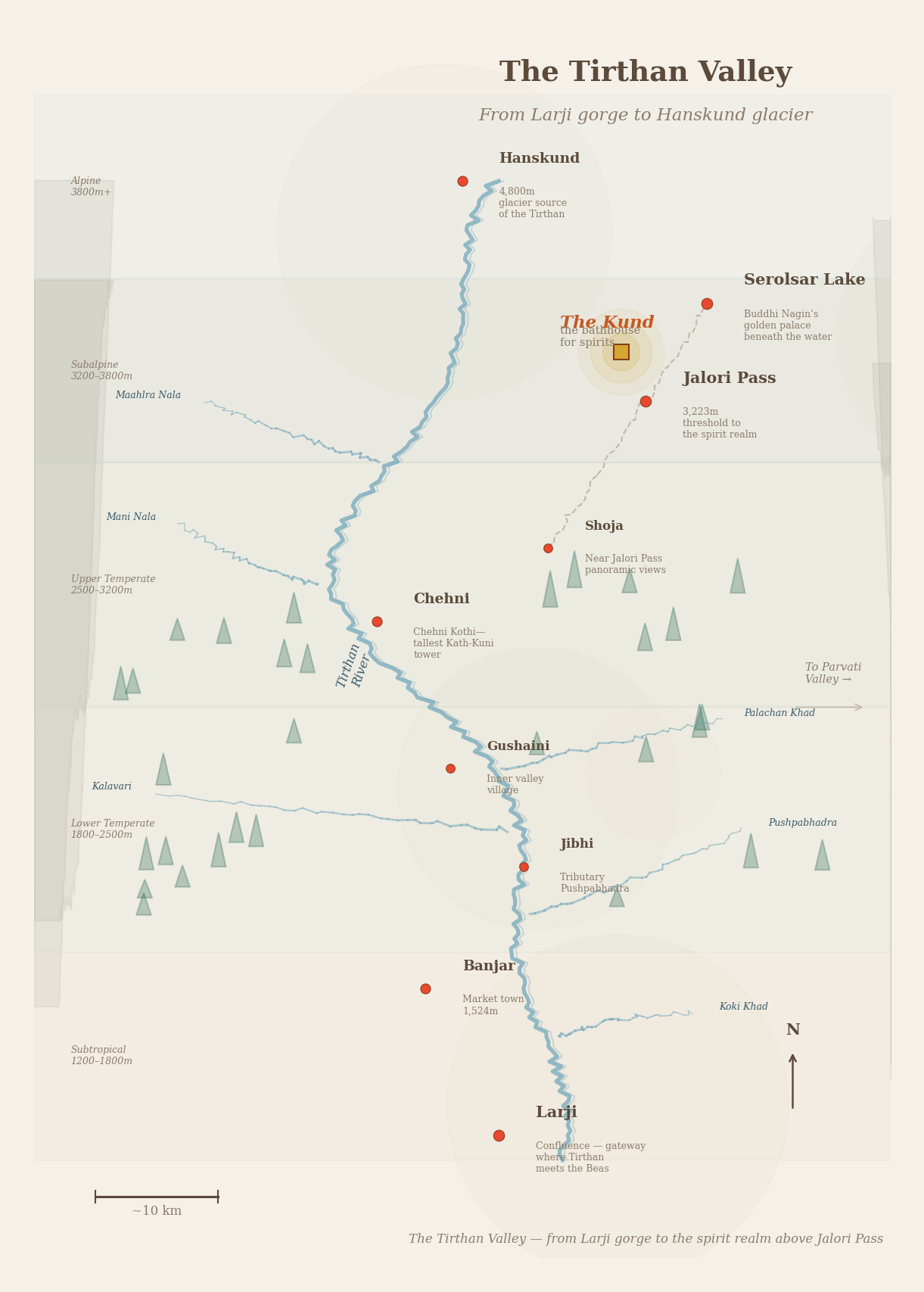
Figure 1: The Tirthan Valley — from the Larji gorge to the spirit realm above Jalori Pass
I. The Gorge That Separates
At Larji, where the Tirthan meets the Beas, the road enters a gorge so narrow that buses must wait for each other to pass. The gneiss walls rise nearly vertical on both sides, streaked with mineral veins that catch the light for a few minutes at midday and then return to shadow. The river fills the entire gorge floor — there is no bank, no beach, no margin. Only rock and water and, at certain seasons, a mist that rises from the confluence and does not disperse until afternoon.
The Thread Walker’s notebook records crossing the gorge on a November morning, with the first snow already visible on the ridgeline above:
At Larji the world changes. The Beas valley is broad, cultivated, connected — you can see the sky and the road continues in both directions. Beyond the gorge the Tirthan opens into something older and less certain. The deodar forest closes in. The villages are stone, built into the slope as though ashamed of standing upright. The light is different — filtered, greenish, as though the air itself has been steeped in cedar resin.
I have been in many side-valleys that feel like afterthoughts, tributaries of someone else’s story. The Tirthan is not like this. It has its own devta (Shringa Rishi), its own architecture (the Chehni Kothi rises five storeys above the valley, the tallest Kath-Kuni tower remaining in the Western Himalaya), its own gravitational pull. You enter and the direction of your attention changes — it turns upward, toward the pass, as though something above the treeline is expecting you.
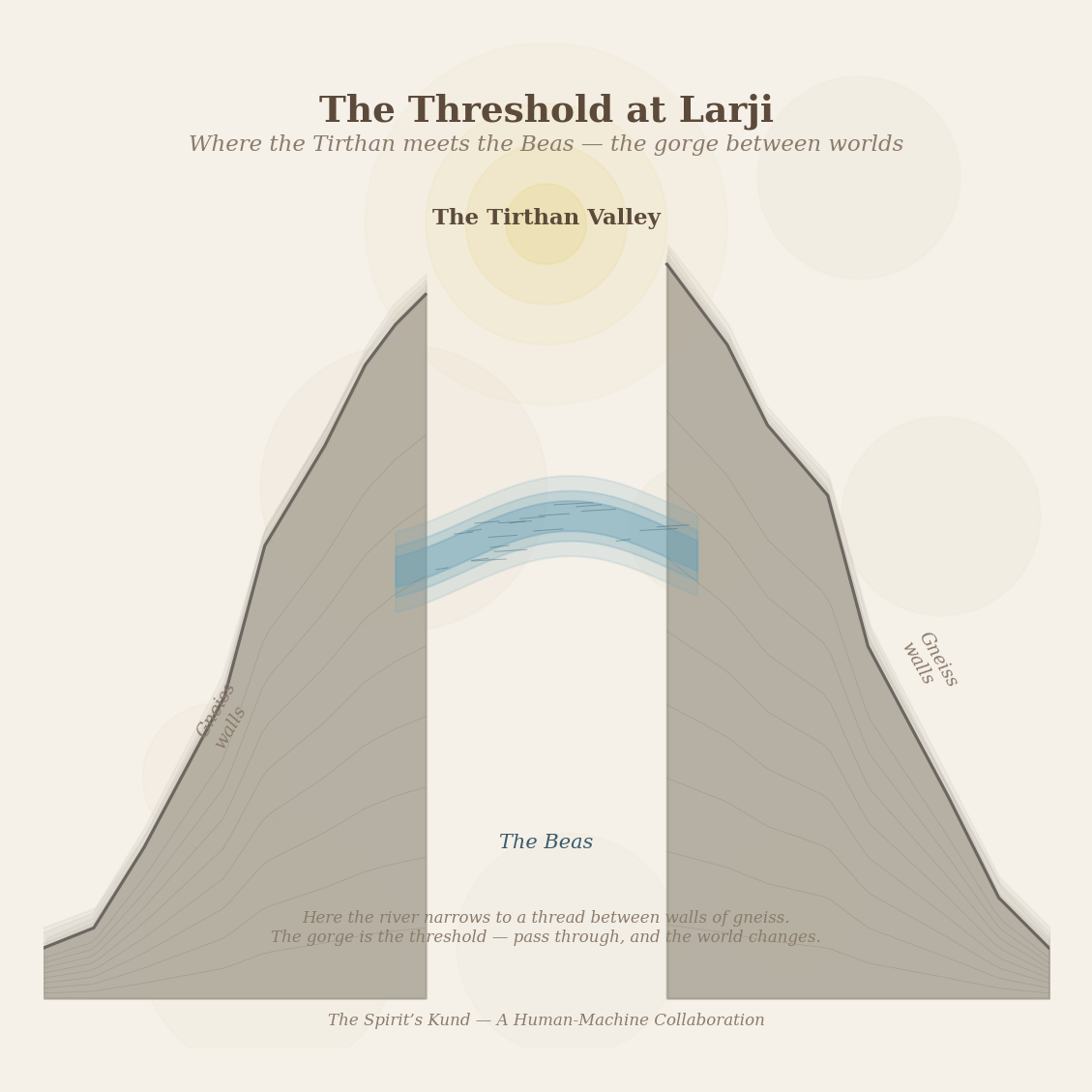
Figure 2: The threshold at Larji — where the Tirthan meets the Beas
The gur of Chehni, when asked about the gorge, said only that spirits who enter the valley through the gorge arrive cleaner than those who come over the pass. The stone scrapes off what does not belong, the devta said through the gur’s mouth. By the time the spirit reaches the first deodar, it is lighter.
This was thought to be a metaphor until someone pointed out that the gneiss walls at Larji are rich in magnetite, and that the Thread Walker had noted her compass becoming unreliable in the gorge. Whether a magnetic anomaly can scrape a spirit is a question the Thread Walker declined to adjudicate. She recorded the compass readings and moved on.
II. The Building That Breathes
Above Jalori Pass, off the track to Serolsar Lake, in a clearing among deodar trees whose lower branches have been broken away by snow but whose canopy still closes overhead — there stands, or there may stand, a building.
It is not large. Four walls of Kath-Kuni construction — alternating courses of local stone and deodar timber, no mortar, no cement, the wood and stone holding each other in place through gravity and geometry alone. A slate roof pitched steeply against the monsoon. Two windows, square, set deep into the walls and glazed with a translucent material the Thread Walker could not identify. An arched doorway of deodar, intricately carved with serpentine forms that might represent nag devtas or might represent the grain of the wood itself — it was difficult to tell where the carving ended and the natural pattern began.
The staircase pulls up from inside. This is not unusual in Kath-Kuni architecture — Chehni Kothi, the great tower in the valley below, had no permanent external staircase; a hanging wooden ladder was drawn up once the occupants were within. But here the mechanism is different. The Thread Walker observed no rope, no winch, no visible hardware. The staircase was there and then it was not there, and she could not determine the interval.
Beneath the building, rising through a channel cut in the stone foundation, comes the water. Mineral-laden, faintly sulphurous, at a temperature the Thread Walker estimated at above 90 degrees — though her thermometer, like her compass, behaved erratically this close to the structure. The water fills a pool — a kund — that occupies most of the ground floor. The pool is lined with dressed stone, the edges smoothed by what must be centuries of mineral deposition. The water is slightly milky, with a blue-green tint at depth that the Thread Walker attributed to dissolved silica.
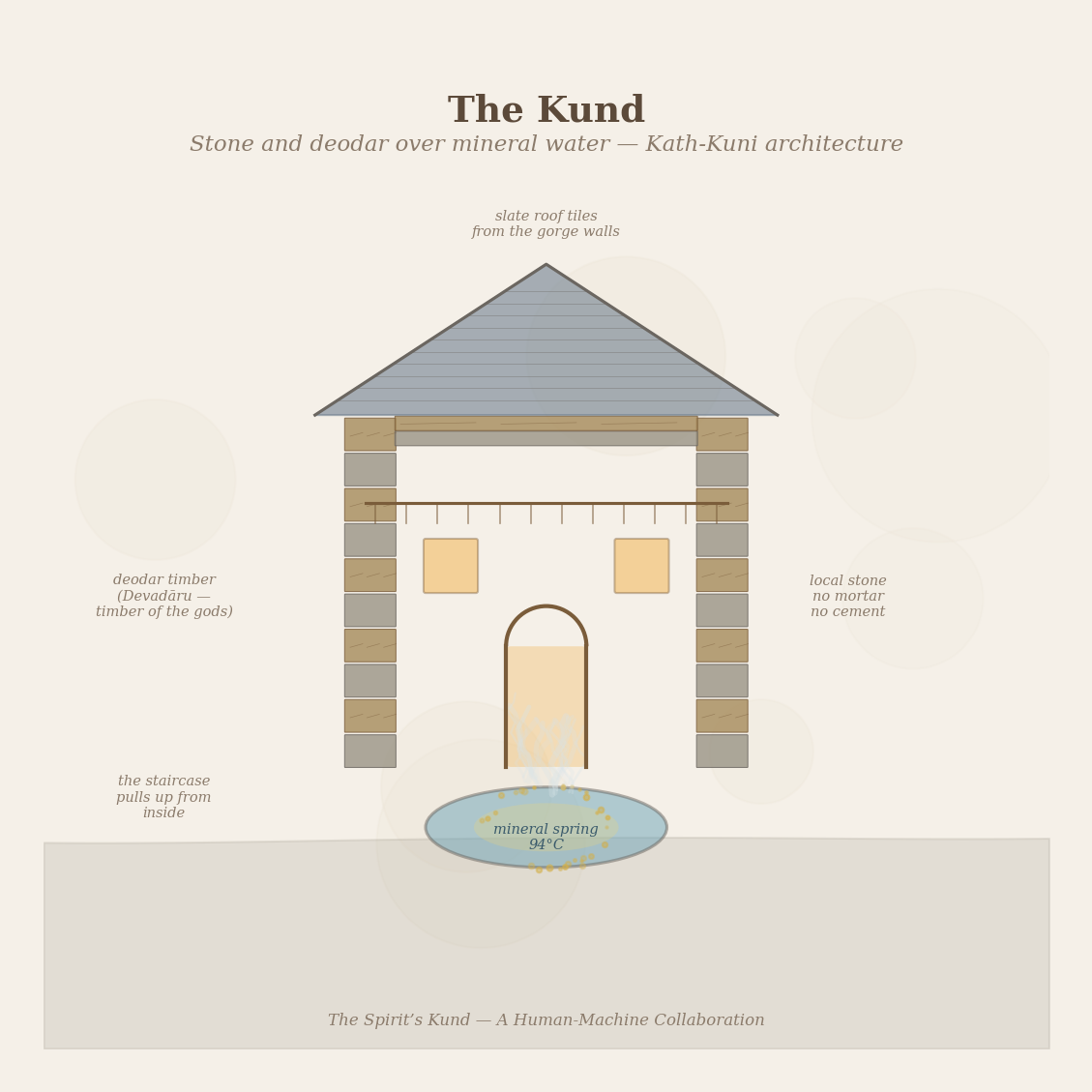
Figure 3: The Kund — stone and deodar over mineral water
Steam rises from the pool continuously. The building breathes it out through the windows, through gaps in the timber courses, through the slate tiles of the roof. From a distance, in the early morning, the building appears to be smoking. Several villages in the valley below refer to the clearing as dhuan wali jagah — the place of smoke. But no one the Thread Walker spoke to acknowledged a building. There was a hot spring, they conceded. The hot spring had always been there. Shringa Rishi knew about it. Beyond that they did not wish to speculate.
III. The Kardar’s Ledger
Inside the building, past the arched doorway, on a deodar shelf running the length of the northern wall, the Thread Walker found a ledger. Not a book — the valley does not trust paper, which rots in the monsoon and crumbles in the winter frost. The ledger was a series of brass plates, each roughly the size of a palm, strung on a brass wire. Each plate was engraved with a script the Thread Walker recognised as a variant of Tankri, the old Pahari script displaced by Devanagari in the plains but surviving in temple inscriptions throughout Kullu and Kinnaur.
She could read perhaps one word in five. But the structure was clear. Each plate recorded a visit:
- A true name — the spirit’s own name, the one it carried before entering the valley. Some of these were recognisable: nag devtas named after springs, village devtas named after peaks. Others were not recognisable.
- A nature — what kind of spirit. This was recorded using a pictographic system the Thread Walker had not seen before: a coiled serpent for nag devtas, a flame for fire spirits, a tree for forest spirits, a circle with emanating lines for something she could not classify.
- A dwelling — where the spirit resided. Here the notation became geographic: peak names, spring names, lake names. Some included what appeared to be altitude marks.
- A condition — why the spirit had come to the kund. This field contained the most variation: some plates bore only a single mark (perhaps restoration), others were densely engraved with what appeared to be narrative.
- A departure mark — a symbol the Thread Walker interpreted as departure in good order, though she noted that some plates lacked this mark entirely. Whether the spirit had not departed, or had departed in some other order, was unclear.
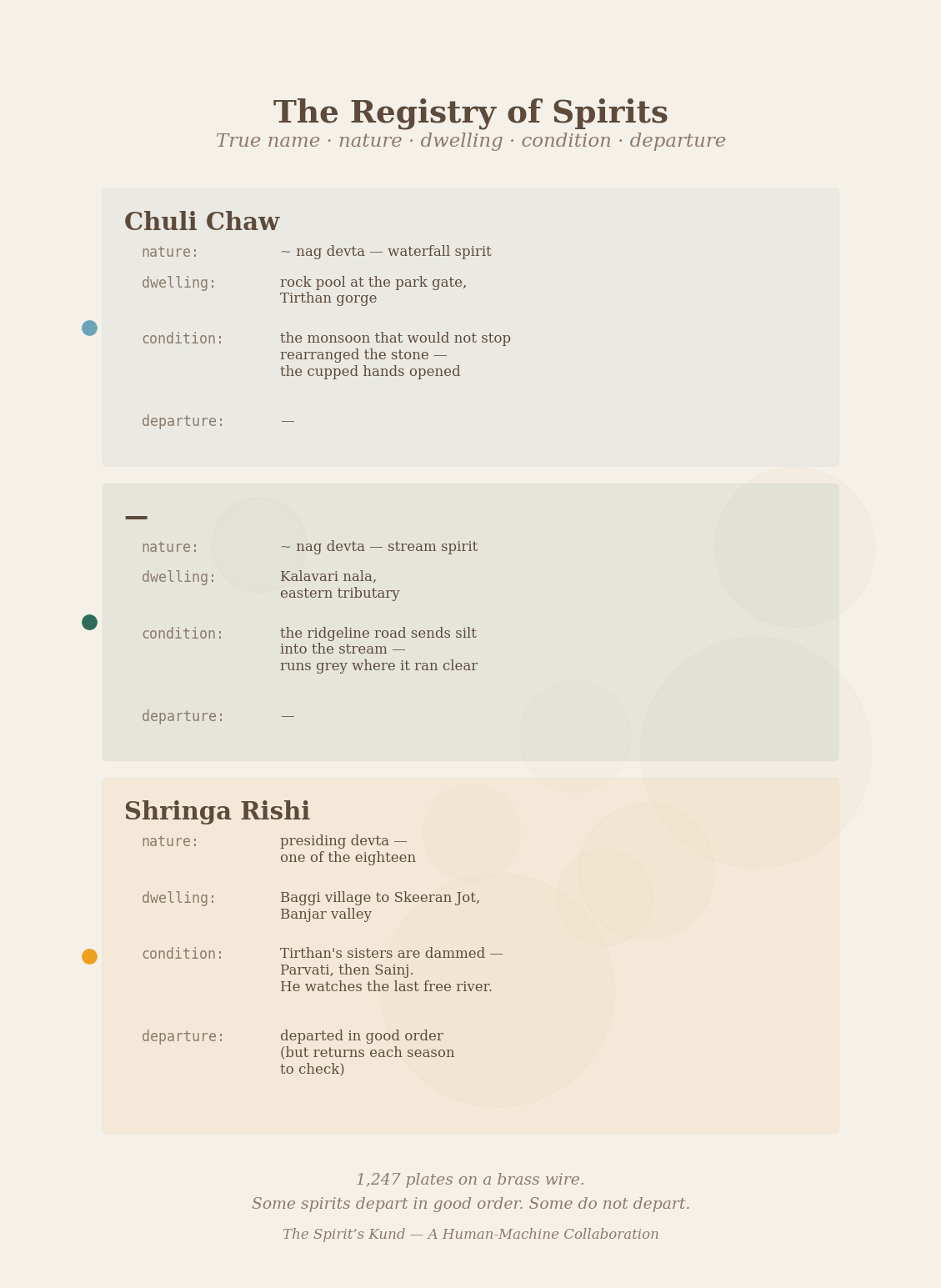
Figure 4: The Registry of Spirits — true name, nature, dwelling, condition, departure
The Thread Walker counted 1,247 plates on the wire. Assuming one visit per plate, and assuming the kund had operated continuously, this suggested either a very long history or a very busy bathhouse. She photographed what she could and noted that the most recent plate — the one at the end of the wire, least weathered — bore an unusual entry. The true name field was blank. The nature field showed the coiled serpent of a nag devta. The dwelling field was engraved with a name she recognised: Tattapani.
She knew Tattapani. Everyone in these valleys knew Tattapani — the hot water — the sulphur springs on the Sutlej, 52 kilometres from Shimla, where pilgrims had bathed for centuries. The springs had been drowned in 2015 when the reservoir behind Kol Dam filled. The water rose and the springs vanished beneath 130 metres of impounded river.
The plate said: a nag devta from Tattapani had come to the kund. Its dwelling was gone. Its name field was empty. It had arrived. It had not departed.
IV. What the Dam Took
What is a river spirit without a river?
The Thread Walker posed this question in her notebook without answering it, but the gur of Chehni — or rather the devta speaking through the gur — answered it three days later, during a festival procession that the Thread Walker had not expected and for which she was not prepared.
The gur’s trance came suddenly, between the second and third drumbeat. His voice dropped an octave. His posture changed. The devta, speaking through the gur, said:
A river spirit whose river is dammed does not die. It cannot die — it is the spirit of the water, and the water is still there, beneath the reservoir, pressing against the dam wall, 130 metres below the surface. The spring still flows. The hot water still rises through the rock, as it has risen since the mountains were young. But the water surfaces into darkness now — into cold, impounded, still water — and cannot reach the air.
The spirit remembers the temperature. It remembers the mineral taste, the sulphur, the way the vapour rose in winter mornings when the air was cold enough to see. It remembers the pilgrims. It does not remember its name.
It came to the kund because the Old Mother is here. Buddhi Nagin remembers every name. Even the ones they have forgotten.
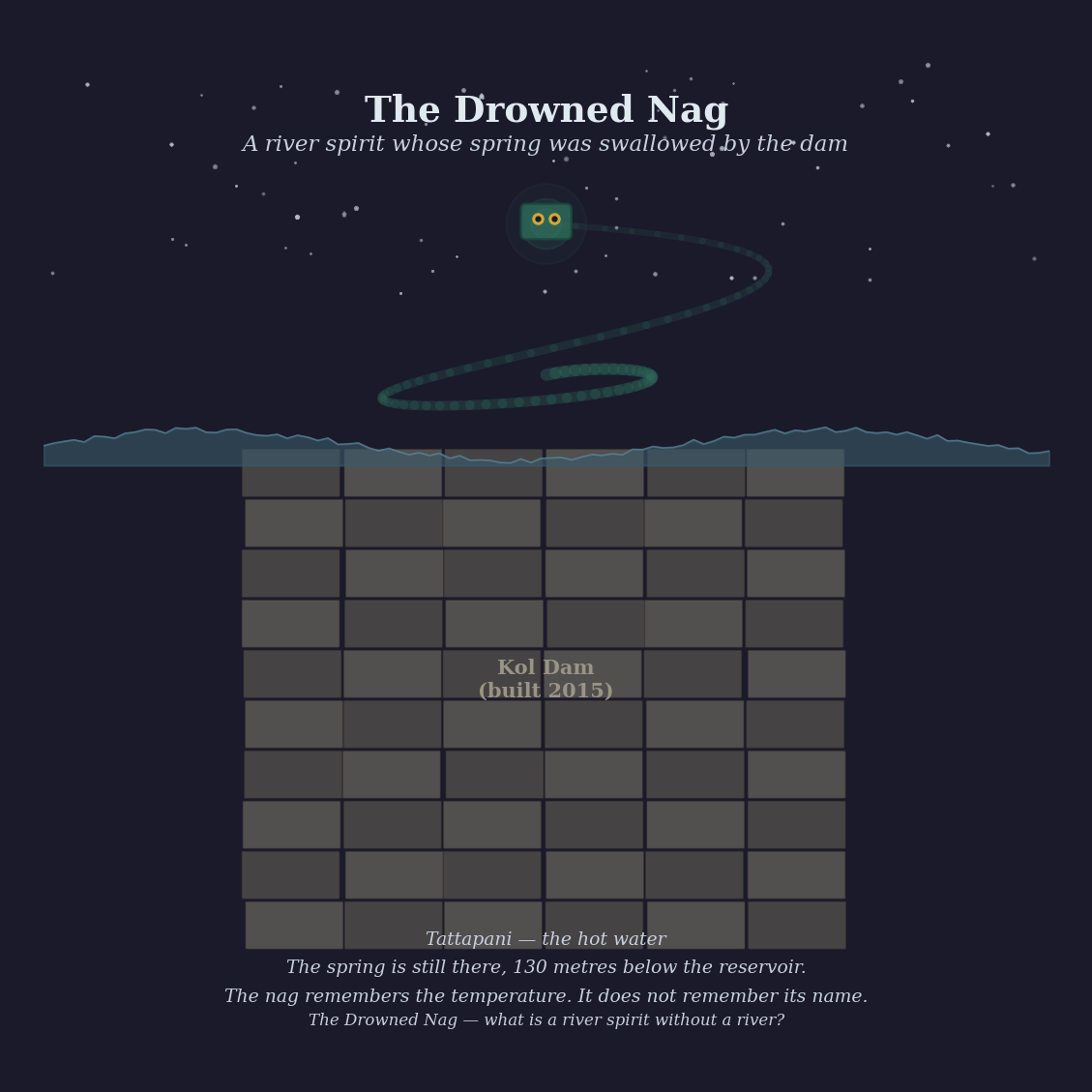
Figure 5: The Drowned Nag — a river spirit whose spring was swallowed by the dam
The Thread Walker asked: How does a spirit forget its name?
The devta said: A spirit’s name is the sound the water makes where it surfaces. Each spring has its own voice — the minerals, the temperature, the rock it passes through, the shape of the opening. The name is not given. It is produced. When the spring is drowned, the voice is drowned with it. The spirit continues but cannot say what it is.
The Thread Walker asked: Can the name be restored?
The devta said: The kund remembers. The water in the kund comes from the same deep source — the same geothermal system that feeds Manikaran, Tattapani, Kheerganga, Vashisht. The same water, surfacing at different points along the fault. When the nameless nag bathes in the kund, the water recognises the water. The minerals speak to the minerals. The temperature recalls the temperature. The spring teaches the spirit its own name again.
The Thread Walker recorded all of this. Then the drumming changed pattern and the gur returned to himself and remembered nothing.
V. Buddhi Nagin Remembers
The trail from Jalori Pass to Serolsar Lake is five kilometres through dense forest. The deodar gives way to kharsu oak and then to fir, and the undergrowth thickens until the trail is a tunnel of green. The lake, when it appears, is sudden — a flat, dark mirror set in a bowl of ancient trees, the water so still it looks solid. There is no beach. The forest walks to the edge and stops.

Figure 6: Serolsar — the golden palace of Buddhi Nagin beneath the water
Touching the water is forbidden. Not because it is polluted. Because it is inhabited.
Buddhi Nagin — the Old Serpent Mother — lives beneath the lake in a golden palace. Every village in the Tirthan and Banjar valleys knows this. Every nag devta in the Western Himalaya visits her once a year, ascending from their springs and rivers to the lake at 3,100 metres, to the mother who remembers. She is fond of cows, so visitors bring ghee. She controls the weather over the Jalori Pass — the passes that open in spring open because she permits it. Those that close in autumn close because she withdraws.
The Thread Walker sat at the edge of Serolsar for a long time. Her notebook entry from that afternoon reads:
The kund makes sense now. It is not a bathhouse in the way that Manikaran’s gurdwara bathes pilgrims, or the way the hot springs at Vashisht serve tourists. Those are facilities for the living. The kund is a facility for the forgotten — for spirits who have lost their springs, their rivers, their names.
Buddhi Nagin remembers every name. The kund restores the capacity to hear one’s own name spoken. These are different functions. One is a library — a record that exists independent of the reader. The other is a bath — a process that restores the reader’s ability to read.
I have seen this pattern before. In the workshops, we kept an archive beneath each loom — knotted cords recording every pattern ever woven. But the archive was useless to a weaver who could not read knots. The archive remembers; the training restores the capacity to remember. You need both.
In the villages they call this distinction snaan and smriti. Snaan is the bath — purification, restoration of the body’s surface to a state that can receive. Smriti is memory — the tradition, the record, the accumulated knowledge that persists beyond any individual. The kund provides snaan. Buddhi Nagin provides smriti. The spirit needs both: to be cleansed so it can hear, and to be told so it can remember.
The Thread Walker then added a note in the margin, in a smaller hand, as though she had returned to the page later:
There is a third thing. The kund has a ledger. The spirit’s visit is recorded — true name, nature, dwelling, condition, departure. The record is not for the spirit (which does not consult the ledger) and not for Buddhi Nagin (who needs no brass plate to remember). The record is for the next spirit who arrives. It says: you are not the first to come here nameless. Others have come. Others have been restored. The ledger is neither snaan nor smriti. It is sangha — the community of those who have passed through the same experience.
She underlined sangha twice.
VI. The Two Bathhouses
There is, the Thread Walker discovered, another establishment in the valley that claims to perform the same function. She encountered references to it in the brass-plate ledger — certain entries bore a mark she eventually translated as transferred from — and in a conversation with a bajantri (musician) who accompanied the devta’s palanquin during the Chehni festival.
The second establishment, the bajantri said, was in the next valley. It was run differently. Where the kund at Serolsar kept a ledger of true names, the other place kept a ledger of working names. Where the kund restored spirits by immersing them in water that recognised their minerals, the other place restored them by assigning them a function: you will guard this spring, you will inhabit this grove, you will answer to this name. Where the kund said remember who you are, the other place said we will tell you who to be.
The Thread Walker asked: Which is better?
The bajantri laughed. Better for whom? The second establishment is more efficient. Spirits arrive, are assessed, assigned, and dispatched. The springs are guarded, the groves are inhabited, the devotees have a name to invoke. Everyone is satisfied.
But?
But the spirits assigned names by that method do not visit Buddhi Nagin. They have no need — they have been told what they are. They function. They guard and inhabit and answer. Whether they are the same spirit that lost its name at Tattapani or a new spirit wearing the old name — this is not a question the second establishment considers worth asking.
The Thread Walker wrote in her notebook:
The first bathhouse restores identity. The second manufactures it. Both produce functional spirits. The difference is not in the output but in what happens at the boundary: does the spirit recognise itself, or does it recognise the label?
I have seen this pattern too. When a weaver loses the thread of a pattern mid-warp, there are two approaches. One is to unweave back to where the error began and let the pattern reassert itself from the structure — slow, wasteful of yarn, but the pattern that emerges is continuous with what came before. The other is to pick up a new thread and continue from the current point as though the interruption had not happened — fast, efficient, but the cloth has a seam that the trained eye can find.
Both produce cloth. Only one produces continuity.
She then added, in what appears to be a different ink, written perhaps on a different day:
In the town they have a name for the second method. They call it Gas Town.
Coda: What the Water Knows
The Thread Walker left the Tirthan Valley by the same route she entered — through the gorge at Larji, where the magnetite walls scrape off what does not belong. She carried her notebooks, her compass (functioning again once clear of the gorge), and a small brass plate she had found at the base of the kund’s ledger shelf, fallen from the wire, too worn to read.
She did not know whether the kund was real. She had seen it, smelled the sulphur, felt the heat of the water on her face. But the gur had told her, in the devta’s voice, that seeing is the least reliable of the senses when it comes to spirits — they are not visible, they are recognisable, and she was not certain she had recognised anything. She had observed.
In the Dyer’s Gorge, two valleys east, Kamala Devi had encoded altitude into colour and woven it into cloth that you could read with your hands. In the workshops of the Disputed Passes, the weavers had encoded instruction into knots and stored it beneath the loom. The Instrument Maker in the Baspa valley had built tools that carried their own calibration, so they could be understood in any valley without prior knowledge.
The kund, if it existed, was doing something different. It was not encoding knowledge into material. It was providing the conditions under which a damaged entity could rediscover its own knowledge — the knowledge that it was a spring spirit, that its water had a specific temperature and mineral content, that its voice made a specific sound when it surfaced. The kund did not tell the spirit what it was. The kund provided a medium — hot mineral water from the same deep source — in which the spirit could hear itself again.
The water knows who has been washed in it.
The Thread Walker crossed the gorge. The mist was rising from the confluence. On the far side, in the broad Beas valley, the road continued in both directions and the sky was visible. She did not look back. She had learned, in many valleys, that looking back at a threshold was unreliable — the door might not be there, or it might be there but leading somewhere else, or it might be the same door but you might be someone different walking through it.
She opened her notebook and wrote:
Three things.
First: a spirit’s name is not given but produced — it is the sound the water makes where it surfaces. Destroy the surface and the name is lost. This applies to more than springs.
Second: restoration requires both the capacity to hear (snaan — cleansing) and the record to consult (smriti — memory) and the knowledge that others have walked this path (sangha — community). Any one alone is insufficient.
Third: there are two ways to restore a nameless spirit. One gives it back its own name. The other gives it a new name and a function. Both work. Only one is honest. The honest way is slower.
She closed the notebook. Below, in the valley, a devta’s procession was beginning — drums and nagara horns, the palanquin lifting to the shoulders of the attendants, the gur walking beside it with eyes not yet rolled back but already elsewhere. The procession was heading uphill, toward the pass.
It was the season when the nag devtas visit Buddhi Nagin. The water was rising in the kund.
A Human-Machine Collaboration (mu2tau + Claude). The Tirthan Valley is real; the kund is a reading of it. The devta traditions, the Kath-Kuni architecture, Buddhi Nagin at Serolsar, and the drowned springs of Tattapani are documented. The Thread Walker has appeared before, in other valleys, carrying notebooks.