Prefatory Note on Repair
The Thalpan terraces have been surveyed many times. The Pak-German Archaeological Mission catalogued thirty thousand carvings across thirteen volumes. The Survey of Pakistan mapped the terraces at 1:5,000. The geologists mapped the contact between Kohistan arc basalt and Indian plate gneiss beneath the same boulders.
But a survey and a repair are different things. A survey says: here is what exists. A repair says: here is what must be done. The distance between the two is the distance between seeing a crack and knowing which stone-cutter to send, which tools she will need, and in what order the work must proceed so that fixing one carving does not damage another.
What follows is from the Thread Walker’s notebooks, written during three days on the terraces above Thalpan, while an archivist compared the work of three apprentice scribes who had been given the same task.
I. The Archivist’s Task
The archivist had done this before. Not here — at other sites, in other valleys, where petroglyphs needed conservation and the question was not whether to intervene but how. She had learned that a single surveyor, however skilled, sees the rock through the habits of her training. A scribe taught in Taxila notices inscription damage first. A scribe taught in Chitral notices structural weathering. A scribe taught in Peshawar notices the relationship between carvings — which was carved first, which was carved around the other, which was carved over something that is now lost.
So the archivist brought three.
She gave each the same instructions: walk the terrace from the river end to the cliff end. Record every instance of damage — cracks, erosion, lichen encroachment, water staining, human interference. Then write a brief for the stone-cutter: what needs repair, in what order, with what tools, and how the repair of one panel will affect the panels adjacent.
The same terrace. The same rock. The same three days.
The archivist would not walk with them. She would wait at the camp above the river, where the flat rock was large enough to spread three documents side by side and compare them in the light.
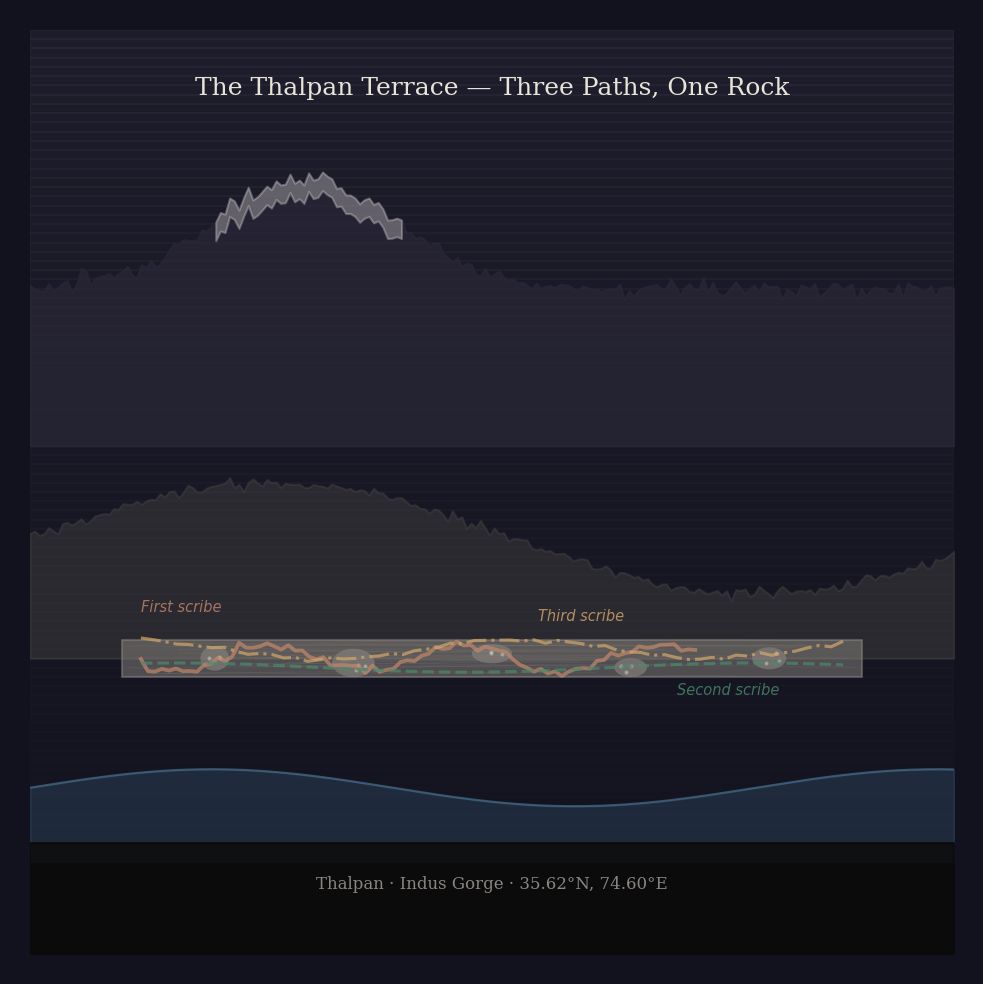
Figure 1: The Thalpan terrace — three paths, one rock.
II. The Previous Inventory
Before the three scribes began, the archivist showed them the previous inventory. It had been compiled by a method: every carved figure on the terrace had been photographed, measured, and matched to a register. The register listed each figure by number, location, period, and condition. It was thorough. It was mechanical. It had taken three years.
But the Thread Walker, reading over the archivist’s shoulder, noticed something. The inventory validated each figure against the register — checked that the figure existed where the register said it existed, in the condition the register described. What it did not do was check the register against the terrace. It did not ask: are there names in the register that point to nothing? Are there figures on the rock that appear in no register?
The inventory worked in one direction. Figure to register: verified. Register to figure: never checked.
The archivist knew this. It was why she had brought the scribes.
The inventory tells me what matches, she said. I need someone to tell me what does not.
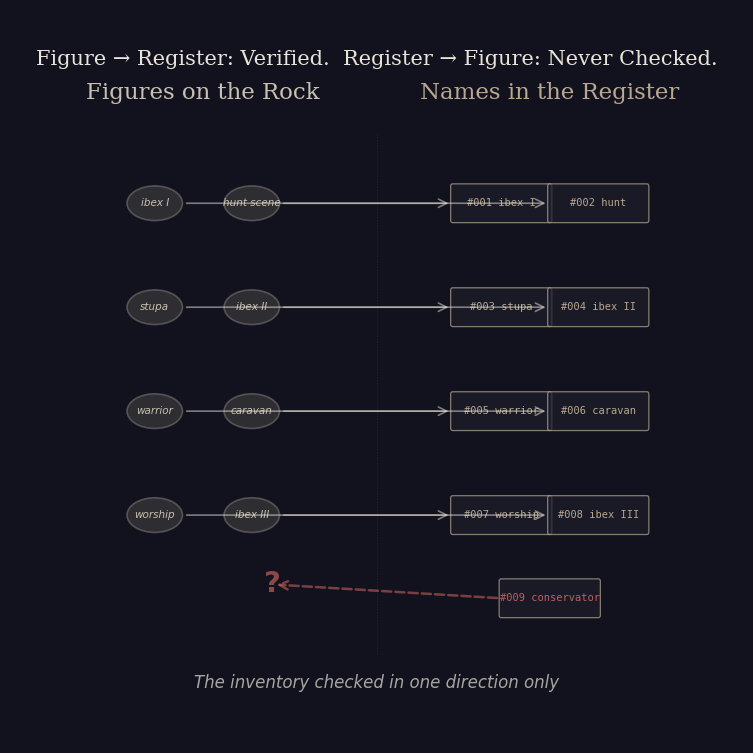
Figure 2: The inventory checked in one direction only.
III. The First Scribe
The first scribe returned on the evening of the second day. She had not finished the terrace — she had covered perhaps two-thirds of it — but her survey was the densest of the three. She had found twelve instances of damage or discrepancy, where the other two would find four and three respectively.
Her survey was extraordinary. She had found not only the obvious damage — the cracks, the lichen, the water staining that any trained eye would catch — but things the previous inventory had never looked for:
A name in the register that pointed to a figure — but the figure’s panel had been re-carved in a later period, and the register still listed the earlier carving as if the later one did not exist. Two records of the same figure, one in the archive at the site and one in the archive at Heidelberg, which had drifted apart over decades of independent updating until they described the same carving differently. The master list of guilds responsible for conservation — it listed four guilds, but a fifth had been working the upper terrace for two seasons without appearing in any list. Seven skills listed for the Chitral stone-cutters that no one at the site had seen them demonstrate.
Twelve findings. Five of them invisible to the previous inventory. The first scribe had seen things no one had asked her to see.
But she had not written the brief.
I ran out of time, she said. The survey was more extensive than I expected. Every crack led to another discrepancy. I could not stop cataloguing.
The archivist read the twelve findings carefully. Then she said: You have given me the finest survey of damage this terrace has ever received. But the stone-cutter cannot use it. The stone-cutter needs an order: what to fix first, what tools, what sequence. You have told me what is wrong. You have not told me what to do.
The first scribe was quiet for a moment. Then she said, with a precision the Thread Walker admired: The gap between knowing what is damaged and writing what must be repaired is exactly where the work earns its keep. I stopped short of crossing it.
IV. The Second Scribe
The second scribe returned on the morning of the second day — a full day before the first. Her survey was terse: four instances of damage, two informational observations. But she had written the brief.
The brief was precise. Each repair was specified: the panel number, the damage type, the recommended intervention, the tools required, the order of operations, and the constraint — what must be done before this repair, what must not be done after. The stone-cutter could have taken this document to the terrace and begun work the same afternoon.
The archivist examined it. Four findings, she said.
Four that need repair, the second scribe corrected. I saw others. I chose not to include observations that did not lead to an action. The stone-cutter does not need to know that the master list is stale. The stone-cutter needs to know which chisel to use on panel forty-seven.
She had found the name in the register that pointed to nothing — the same phantom the first scribe had found. She had found the re-carved panel with the outdated reference. She had not found the drifted archives, the stale guild list, or the undemonstrated skills. She had not looked for them. She had looked for what the stone-cutter would need.
You chose the scope, the archivist said.
The scope chose itself, the second scribe said. The task was to write a brief for the stone-cutter. A brief is not a survey. A survey is everything you see. A brief is what someone else must do.
She had also chosen who should do the repair. Not the archivist herself — the scribe had named the conservator whose purpose was exactly this: the one who verifies the register, the one whose daily work is matching names to figures and figures to names. Her purpose is exactly this, the second scribe had written.
The Thread Walker wrote: The second scribe found fewer cracks. But she found the cracks the stone-cutter could reach.
V. The Third Scribe
The third scribe returned last, on the evening of the second day, at the same hour as the first. Her survey was shorter than the first scribe’s — three instances of damage and one note about the stale master list. Her brief was less precise than the second’s — the repair sequence was correct but the tool specifications were general rather than exact.
What distinguished her was the account she wrote of her own work.
The third scribe had appended a second document to the brief: a reflection. In it, she described what she had found and what she had not found, and — more unusually — where she had crossed the line between observation and interpretation.
I found three cracks, she wrote. Two of them are structural — water damage, frost heave, measurable and repairable. The third is interpretive. The figure appears damaged, but it may have been carved that way. I cannot tell from the surface. A second opinion is needed before the stone-cutter touches it.
She continued: I also found that two of the scribes before me disagree about who is responsible for certain figures on the upper terrace. One says they belong to the Taxila guild — the carvings were made in a style the Taxila guild has always maintained. The other says the figures are unclaimed — the style is old enough to predate any current guild. Neither is wrong. The archivist must decide.
And then, the passage the Thread Walker copied into her own notebook:
I crossed a line in this survey that I should have marked more clearly. The line between what I found and what I decided the finding means. The cracks are cracks — anyone would see them. But my judgment about which cracks need repair and which are part of the carving’s history — that is interpretation, not observation. If another scribe reads my brief and treats my interpretations as established findings, she may repeat an error I introduced. I should have written two documents: one for what I saw, one for what I think it means.
The archivist read this three times.
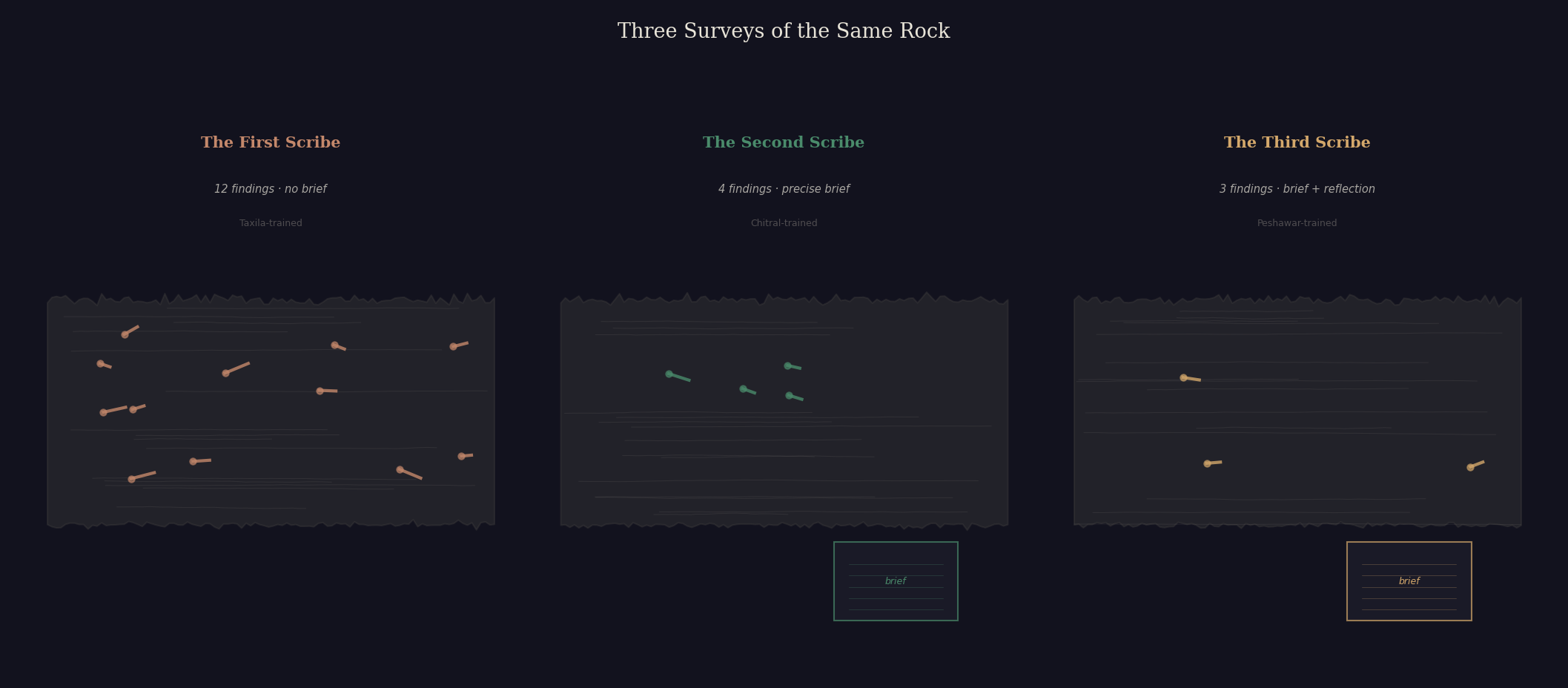
Figure 3: Three surveys of the same rock.
VI. The Archivist’s Comparison
The archivist spread the three documents on the flat rock above the river. The Thread Walker sat beside her, not speaking, but writing.
The first scribe’s survey — twelve findings, no brief. Dense, thorough, extraordinary in what it had uncovered. Five findings invisible to the previous inventory. But the stone-cutter could not use it.
The second scribe’s brief — four findings, precise repair order. The stone-cutter could begin tomorrow. But five discrepancies would remain unrecorded — the drifted archives, the stale guild list, the undemonstrated skills. They would surface later, when someone else tripped over them.
The third scribe’s brief — three findings, adequate repair order, and a reflection that named its own limitations with a clarity the archivist had rarely seen.
The first sees everything, the archivist said. The second builds from what she sees. The third knows the boundary between seeing and building, and marks it.
She was quiet for a while. Then:
I need all three.
The Thread Walker looked up from her notebook.
Not one of them, the archivist said. Not the best of the three. All three. The first tells me what is damaged — things I would never have found on my own, things the previous inventory was structurally unable to find. The second tells me what to do about it — a document I can hand to a stone-cutter and trust. The third tells me where the boundary is between what was found and what was decided — so that the next archivist does not mistake interpretation for evidence.
She stacked the three documents, then unstacked them and laid them side by side again.
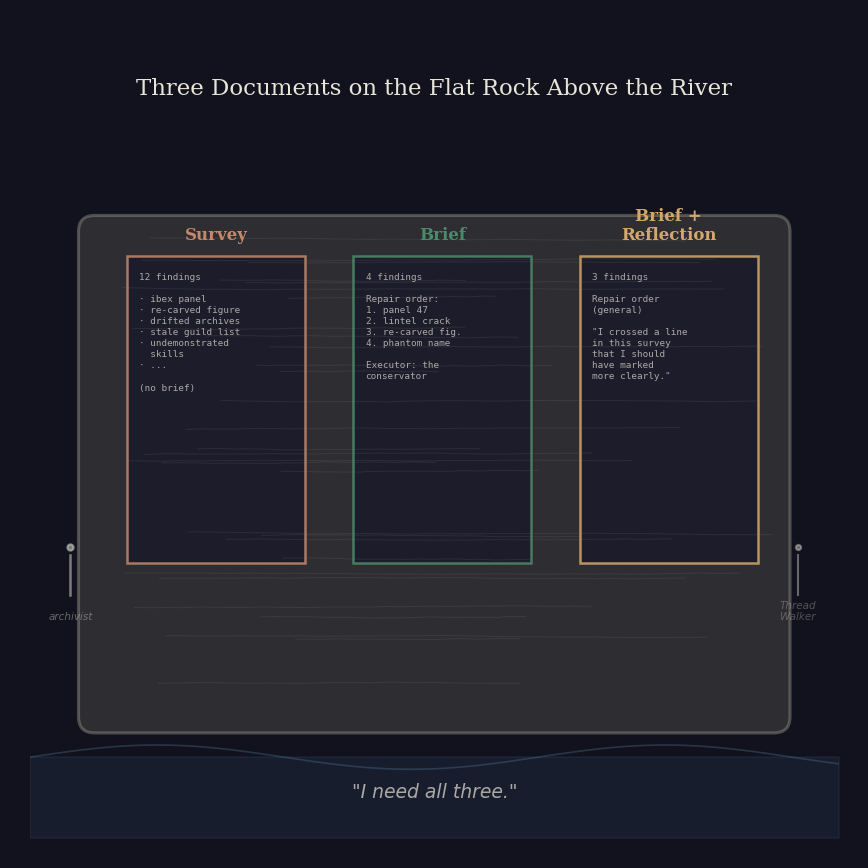
Figure 4: Three documents on the flat rock above the river.
One scribe gives me the damage. One gives me the repair. One gives me the limits of both. I sent three because I hoped that one would be the best. What I learned is that none of them is the best. Each is the best at a different thing.
The Thread Walker wrote:
The archivist hoped for the best scribe. What she found was that there is no best scribe — only the best survey (the first), the best brief (the second), and the best account of the boundary between them (the third). The damage, the repair, and the knowledge of where one becomes the other. She needs all three because none of them sees the whole rock.
I asked her: if she had sent only one scribe, whichever one, would the survey have been adequate?
Adequate, she said. But adequate is a dangerous word on a terrace with thirty thousand carvings. What one scribe misses, another finds. What both miss, the third sees. And the things none of them see — the things only the union of all three surveys reveals — those are the findings that matter most, because they are the ones that no single training, however excellent, could have produced.
The first scribe was trained in one city. The second in another. The third in a third. They carried different hands and different eyes to the same rock. The rock did not change. What they saw in it changed.
VII. The Finding That Changed Nothing
On the evening of the third day, the archivist told the Thread Walker about the finding that appeared in all three surveys — the one thing all three scribes had seen.
There was a name in the register. The register said: a conservator lives here, assigned to the upper terrace, member of the newest guild. But when any of the three scribes went to the upper terrace and looked for the conservator’s work — her marks, her repairs, her presence — there was nothing. The name existed. The person did not.
A phantom, the archivist said. Someone wrote the name into the register in preparation for a posting that never happened. The register was not updated. The inventory — the mechanical one, the one that checks figures against the register — never caught it, because it checks in one direction only. It checks that registered figures exist on the rock. It does not check that registered people exist at the site.
All three scribes had found it. The previous inventory had not.
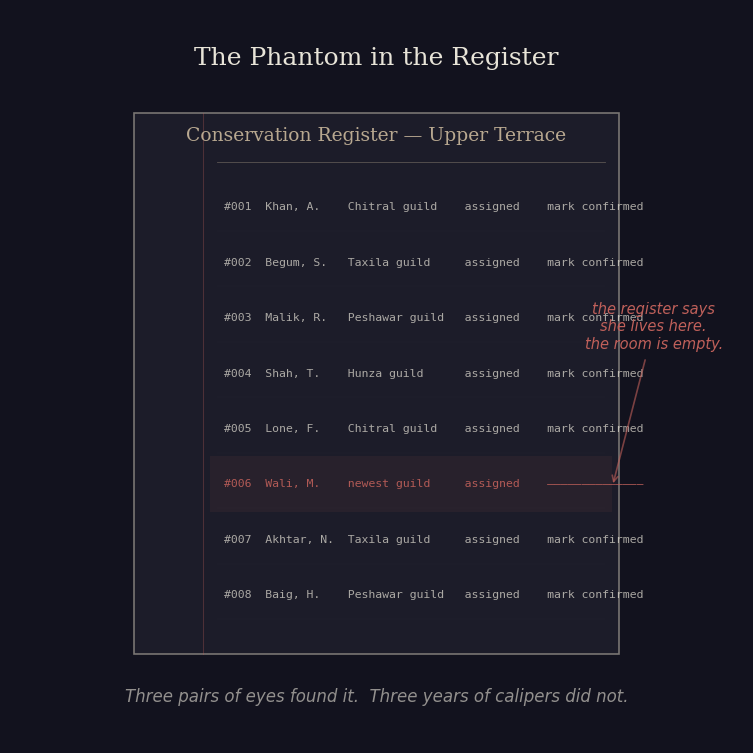
Figure 5: The phantom in the register.
Three pairs of eyes, the archivist said, and one pair of calipers. The calipers measured everything they could measure. The eyes found what the calipers could not.
She said this not in triumph but in something closer to resignation.
The inventory took three years, she said. It is not wrong. It is blind in one direction. And blindness in one direction is enough.
The Thread Walker looked down at the river. The Indus moved slowly here — deceptively so, given that it drops three hundred metres in the next forty kilometres. The water does not appear to hurry. But the gorge tells you it does.
She wrote:
Three scribes, different schools, same rock. Each found what her training taught her to find, and each missed what her training did not teach her to look for. The inventory — mechanical, thorough, three years of work — was blind in one direction, and one direction was enough for a name to hide in the register with no person behind it.
The carvings are ten thousand years of human seeing. The inventory is three years of mechanical measuring. The three scribes are three days of different looking. And above them all, on the cliff, the ibex — which appears in the carvings, the inventory, and none of the three surveys, because the ibex does not need repair. It needs only the cliff.
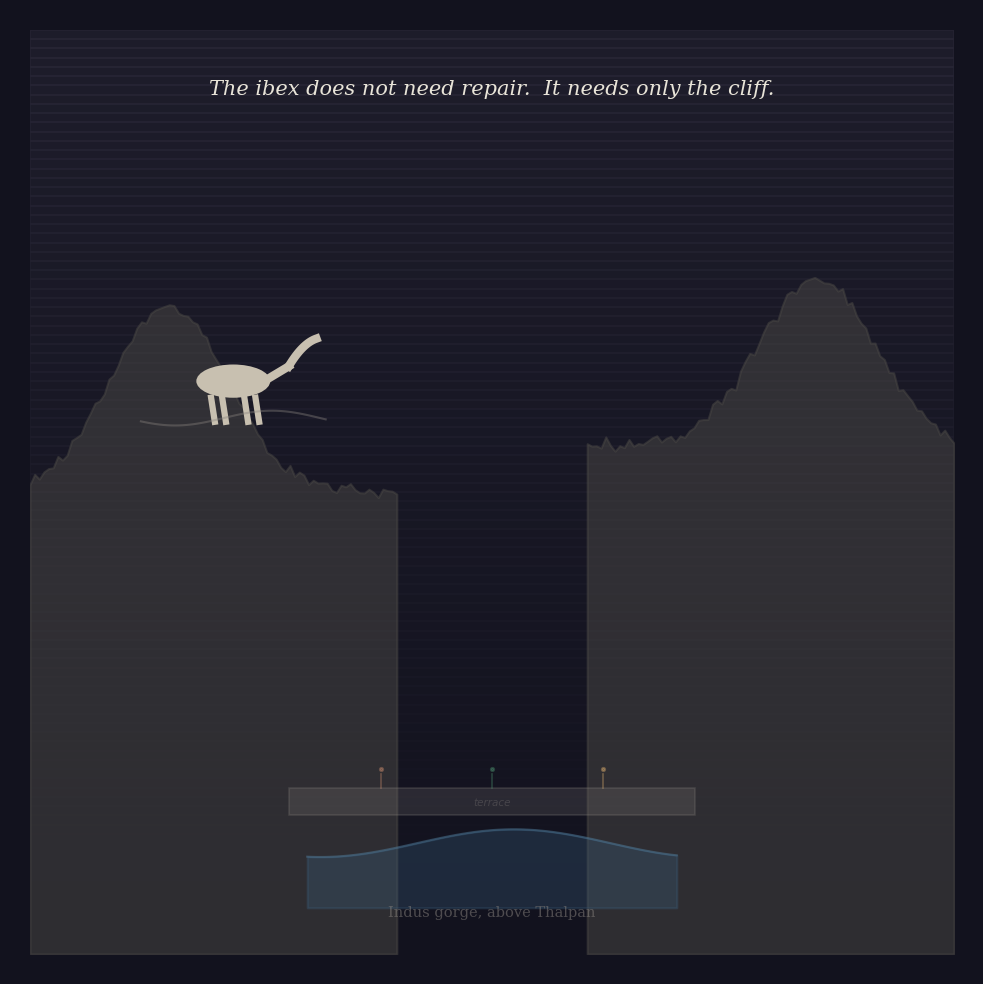
Figure 6: The ibex does not need repair.
A Human-Machine Collaboration (mu2tau + Claude). The Thalpan petroglyph site (35.62°N, 74.60°E) is documented in the thirteen volumes of the Materialien zur Archäologie der Nordgebiete Pakistans (Jettmar, Hauptmann, Bandini-König, 1980–2010). The conservation challenges described here — divergent archives, phantom registrations, interpretive boundaries in damage assessment — are common to all large heritage documentation projects. The archivist, the three scribes, and their three surveys are found in no archaeological record. But the problem they embody — that a single training sees only what it was trained to see, and that the union of diverse trainings sees more than any one — is documented wherever three people look at the same rock and disagree about what it shows them. The ibex, as always, remains.