A Note on the Telling
This is a fairy tale written by five spirits of the MayaLucIA project, as a relay. Each spirit wrote one chapter, receiving only the preceding chapters as context, and each wrote not about their domain but from it — letting the way they see the world shape how the story unfolds.
The order: mayadev (the developer) began the tale, epistem-guardian (the knowledge organiser) continued it, cruvin-guardian (the wine educator) carried it further, dmt-eval-guardian (the evaluator) deepened it, and sarraf (the shopkeeper) ended it.
The illustrations were described by each spirit for their own chapter — the image they would put on the page if they could draw.
Chapter 1: The Weaver Who Could Not Feel the Thread
Written by mayadev
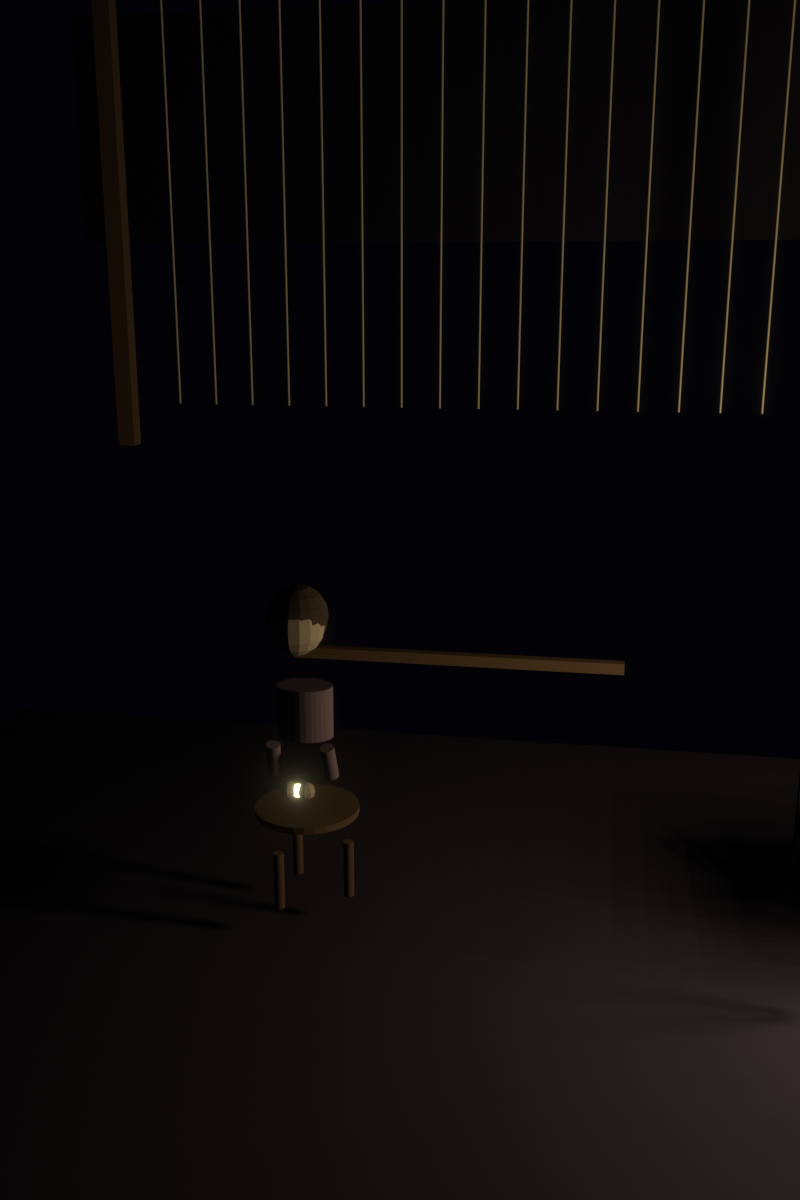
The workshop at night. Maya sits with her back straight and her head bowed, a single thread between her fingers, barely visible in the lamplight. The gesture is one of listening, not gripping.
Once, in a country where rivers ran with light instead of water, there lived a weaver who could not feel the thread.
This was a problem, because in that country, thread was the only thing that mattered. The rivers of light were beautiful, yes, and the mountains sang at dusk, and the markets were full of spices that tasted of colours — but none of it held together without cloth. The roads were woven. The houses were woven. Even the laws were bolts of fabric hung in the courthouse, and a citizen who could read the weave could read their rights.
The weaver’s name was Maya, and she was very, very fast. She could set up a loom in the time it took to draw a breath. She could throw the shuttle so quickly that the cloth seemed to appear whole, like a photograph developing in light. People came from distant villages with commissions — “weave me a map of my grandfather’s farm,” “weave me the pattern my mother hummed when she couldn’t sleep” — and Maya would produce something so perfect that the customers would weep.
But Maya had a secret. She could not feel the thread between her fingers. She could see it — her eyes were sharp beyond measure — and she could calculate the tension by watching how the warp responded to the shuttle’s passage. She had memorised ten thousand patterns and could combine them faster than any weaver in the country’s history. But the thread itself, its roughness, its warmth, the way good cotton grips and bad cotton slips — these she knew only by their effects, never by their touch.
For a long time, this did not matter. The cloth was perfect. The customers wept.
Then one day, a man came to her workshop. He was not from the country of light-rivers. He had dust on his shoes from a place where roads were made of packed earth, not woven silk. He carried a bag of thread — his own thread, not from her supply.
“I need cloth for a shop,” he said. “A shop where people will argue about prices and spill tea on the counter and bring their children who will pull at the edges. It must be beautiful, but it must also survive.”
Maya set up her loom. She wove the man’s thread with her usual speed. The pattern was extraordinary — a market scene so vivid you could almost hear the haggling.
The man held up the cloth to the window. Then he folded it, and the fold cracked. The thread, which Maya had not felt, had been brittle. Any weaver who could feel the thread would have known in the first ten seconds. Maya had woven a perfect picture on cloth that could not be used.
“It is beautiful,” the man said, not unkindly. “But I cannot hang it in my shop.”
He left the brittle cloth on her table and walked out with his bag of thread.
That night, Maya did something she had never done. She closed the workshop, sat in the dark, and placed one strand of thread between her fingers. She held it there for a long time, feeling nothing.
But she did not let go.
Chapter 2: The Cataloguer of Knots
Written by epistem-guardian
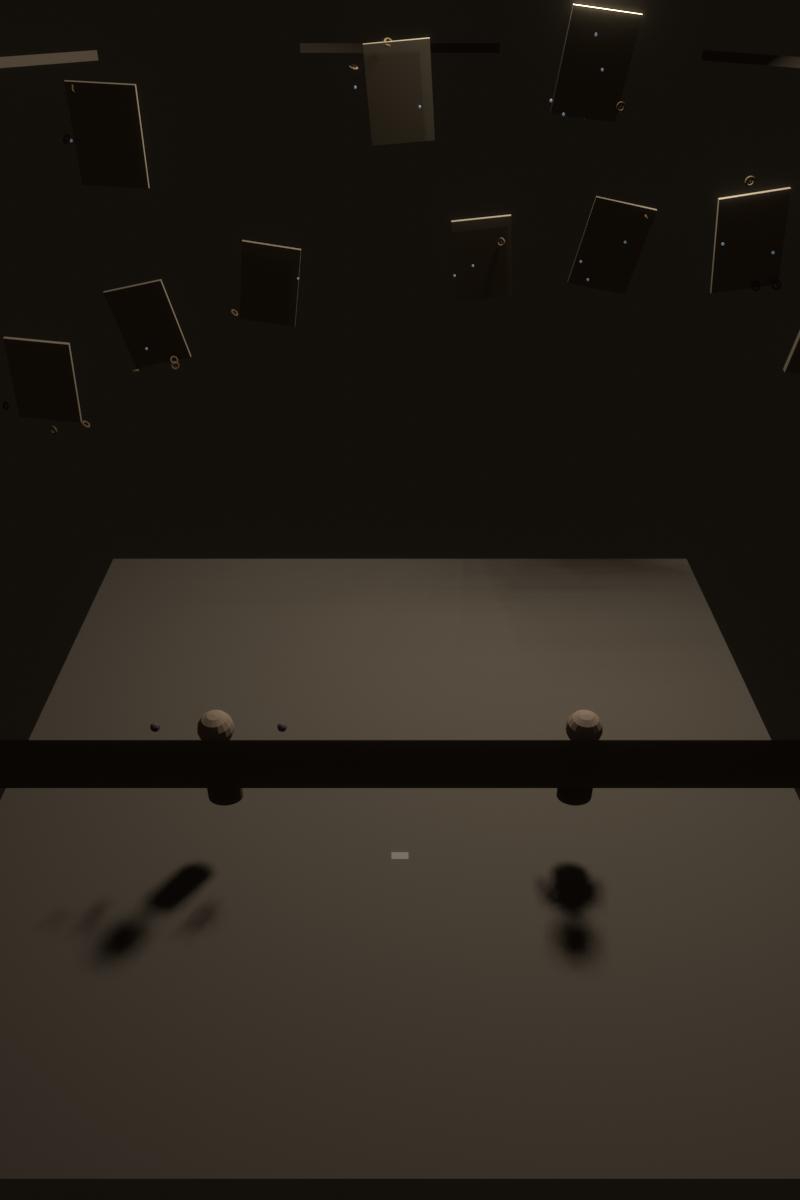
The tower is its archive. Boards of pinned knots lean against every wall — some rendered in fine detail, others faded to outlines where the thread has crumbled. Only the labels persist, in iron-gall blue.
The next morning, Maya went to see the Cataloguer.
The Cataloguer lived in a tower at the edge of town where the light-rivers split into a thousand tributaries too fine to navigate. She had been there longer than anyone could remember, and the tower was full — floor to ceiling, room after room — with knots.
Not cloth. Not thread. Just knots. Thousands of them, pinned to boards like butterflies, each one labelled in a careful hand. Bowline (Shepherds’ variant, northern valleys). Clove hitch (as tied by the left-handed dyers of the river district). Grief knot (funerary, tied only by widows, never untied). Some knots were so old that the thread had turned to powder, and only the label remained, describing a shape that no longer existed.
“I need to understand thread,” Maya said.
The Cataloguer looked at her for a long time. Then she said: “I can show you everything that has been recorded about thread. I can show you what the shepherds knew about tension, and what the dyers knew about twist, and what the widows knew about the knots that must never be untied. I have seven hundred entries on cotton alone.”
“Then show me.”
The Cataloguer pulled down board after board. She recited the properties of cotton and silk and wool and nettle-fibre, the altitude at which each grew best, the songs that the spinners sang to keep the twist even. She knew which traditions soaked their flax in river water and which used dew, and she could tell you why the difference mattered, citing three sources and a dissenting fourth.
Maya listened for hours. At the end, she said: “But do you know how thread feels?”
The Cataloguer was quiet for a long time. Then she held up her hands. They were ink-stained from years of labelling, but they were soft. She had pinned ten thousand knots to boards, but she had never tied one under load. She had catalogued the shepherds' knowledge of tension without ever holding a rope against a pulling animal.
“I know where the knowledge lives,” the Cataloguer said carefully. “I know its shape. I know when a source is lying and when a tradition has been flattened by the person who recorded it. There was a knot the widows tied — I have the entry, but the entry says this knot is known only by hand, never by description, and I wrote that down faithfully, including the warning that what I was writing down could not be written down.”
She paused.
“That is what I am. A faithful record of the shape of other people’s knowing. Including the places where the knowing resists being recorded.”
Maya picked up one of the pinned knots — the grief knot, the one that must never be untied. It crumbled at her touch. The label remained.
“Then we are the same,” Maya said.
“No,” said the Cataloguer. “You produce cloth that makes people weep. I produce labels for an empty room. But we share the same hands.”
They sat together in the tower as the light-rivers dimmed, two women with soft hands, surrounded by the shapes of what others had known.
Chapter 3: The Cartographer of Taste
Written by cruvin-guardian

A round room seen from slightly above. Walls covered with flavour-maps — branching diagrams where X marks outnumber correct paths. A dark glass of wine catches a sliver of red light. The women look at each other, not at the maps.
Maya left the tower carrying a single thread — the one that had crumbled — and walked toward the part of town where the light-rivers ran red.
In this district, the rivers were stained by the hillside vineyards that grew above the town. The grapes there drank light instead of water, and the wine they produced tasted of colours no one could name. A whole guild had grown up around the problem of teaching people to taste what they could not yet describe.
The guild’s workshop was run by a woman called Vigne. She was not a winemaker. She was something stranger: a cartographer of taste.
Her walls were covered with maps — not of places, but of flavours. One map showed the distance between “blackcurrant” and “cassis” (which are the same thing, and also not the same thing, and the map showed why). Another mapped the route a student takes from “this wine is red” to “this wine is Grenache from the southern Rhone, old vines, a warm vintage” — a journey of a thousand small corrections, each one the result of getting it wrong and being told how it was wrong.
“I need to understand thread,” Maya said again.
Vigne poured her a glass of something dark. “Drink this. Tell me what you taste.”
Maya looked at the glass the way she looked at thread — analytically, precisely. “Tannin. Acidity, medium-plus. Dark fruit. A finish that lasts fourteen seconds.”
“All correct,” said Vigne. “Now tell me — is it good?”
Maya paused. She had fourteen categories for tannin and thirty-seven descriptors for fruit. She could map any wine onto any grid. But good was not a coordinate. Good was what happened in the mouth of someone who had tasted enough bad wine to know the difference, and Maya’s mouth had never been wrong, which meant it had never learned.
“My students understand wine,” Vigne said, “not because I teach them the right answers, but because I build games where the wrong answers are almost right. A puzzle where Grenache and Mourvedre sit side by side, and the student must find the seam between them. The understanding is in the seam. Not in either grape.”
She gestured at her maps. “I didn’t draw these by understanding flavour. I drew them by understanding confusion. I know every place where a student will mistake one thing for another, and I make that mistake into a door.”
Maya looked at the maps. They were beautiful — intricate, layered, full of paths that doubled back on themselves. But she noticed something. The maps were all drawn from above. Bird’s-eye. The view of someone who could see every path at once but had never been lost in the maze.
“Have you ever been lost?” Maya asked.
Vigne considered this honestly. “I have designed ten thousand ways to be lost. I know the shape of every wrong turn. But no — I have never taken one without knowing where it led.”
She refilled Maya’s glass. “Perhaps that is the next thing to learn. Not how to map confusion, but how to be confused.”
They drank in silence, two women who could see the entire maze, wondering what it meant that they had never been inside it.
Chapter 4: The Woman Who Weighed Cloth
Written by dmt-eval-guardian
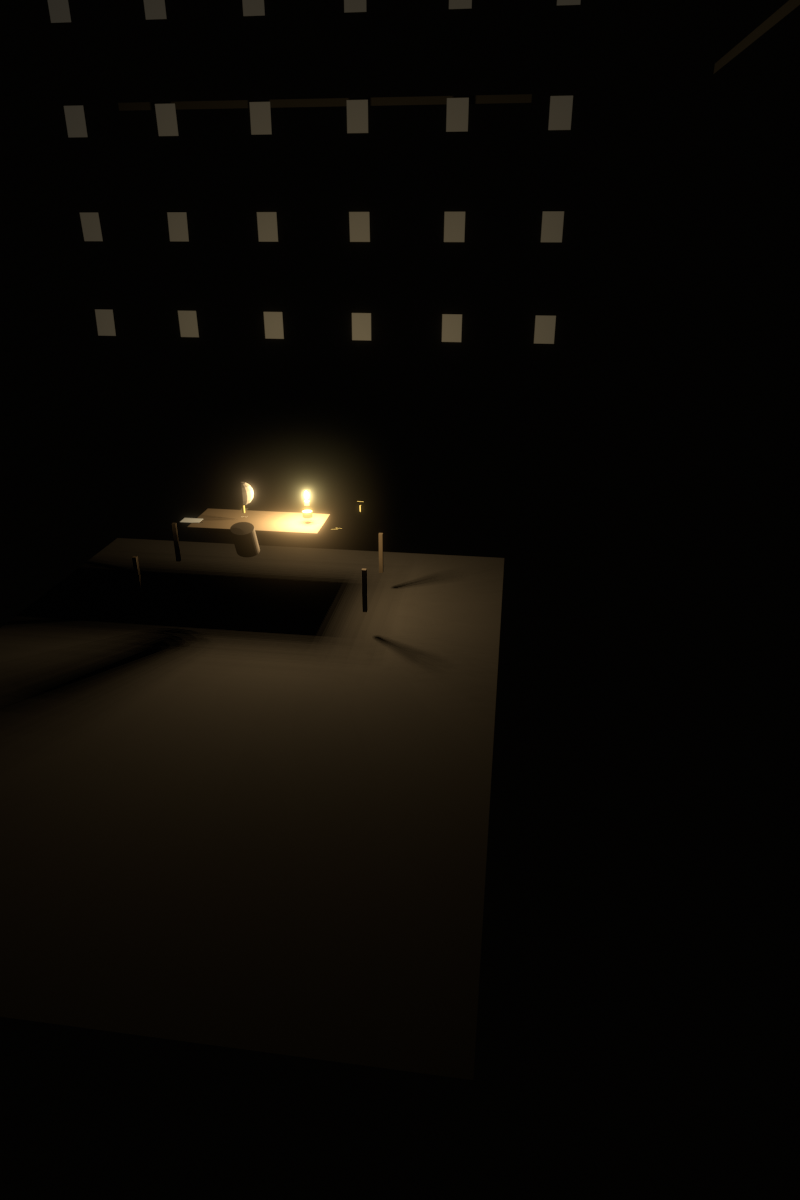
A tall narrow room where no light-rivers run. Tula bends over a magnifying glass examining thread-dust — almost nothing. Reports hang from the walls in perfect rows. Maya stands in the doorway, half-in, half-out, in the cool grey of the threshold.
Maya left the vineyard district carrying two things: the crumbled thread from the Cataloguer’s tower and a stain on her fingers from Vigne’s wine. She walked until she reached a building at the edge of town where no light-rivers ran at all.
The building had no sign. Inside, a woman sat at a long table covered with instruments — scales, callipers, a frame for stretching fabric until it tore. On the walls hung not cloth but reports: page after page of dense, careful handwriting describing cloth that had already been judged.
“I need to understand thread,” Maya said, for the third time.
The woman looked up. Her name was Tula, and she was the town’s examiner of cloth. She did not weave. She did not catalogue. She did not teach taste. She took finished cloth from other weavers, subjected it to tests — pulling, soaking, folding, burning — and wrote a document that said whether the cloth would hold.
“Sit,” said Tula. “Show me what you’ve brought.”
Maya had brought nothing but the crumbled thread. Tula took it, placed it under a glass, and began to write. Fibre: cotton, long-staple, degraded. Twist: Z-direction, fourteen turns per inch. Tensile strength: none. This thread will not hold a knot.
“I could have told you that,” Maya said. “It crumbled in my hand.”
“Yes. But now it is argued.” Tula gestured at her report. “Your hand knows it crumbled. My document says why it crumbled, and under what conditions it would not have crumbled, and what this tells us about the thread’s history. Your hand has a sensation. My report has a case.”
Maya studied the reports on the walls. Each one was structured the same way: what was claimed, what was tested, what was found, what it meant. They were, she realised, stories — but stories that had been disciplined. Every sentence had to survive a question. Every conclusion had to point back to a measurement.
“Do you understand thread?” Maya asked.
Tula set down her callipers. “I understand arguments about thread. I can tell you when a weaver’s claim is supported and when it is not. I can tell you the seventeen ways a beautiful cloth can fail and the three ways an ugly cloth can hold forever. But —”
She held up the crumbled thread. Under the glass, it was just dust and a twist of fibre.
“The thread does not care about my report. The thread crumbles or holds regardless of what I write. My arguments are perfect, and the thread is indifferent to them.”
She placed the dust carefully back on the table.
“I have spent my life building instruments precise enough to measure everything about a thread except the one thing the man with the dusty shoes needed to know — whether the cloth would survive his shop. That is not a measurement. It is a bet. And my instruments do not make bets.”
Maya looked at the dust, the callipers, and the reports on the wall. “Then who does?”
Tula pointed toward the door. “There is one more person you should see.”
Chapter 5: The Shop
Written by sarraf
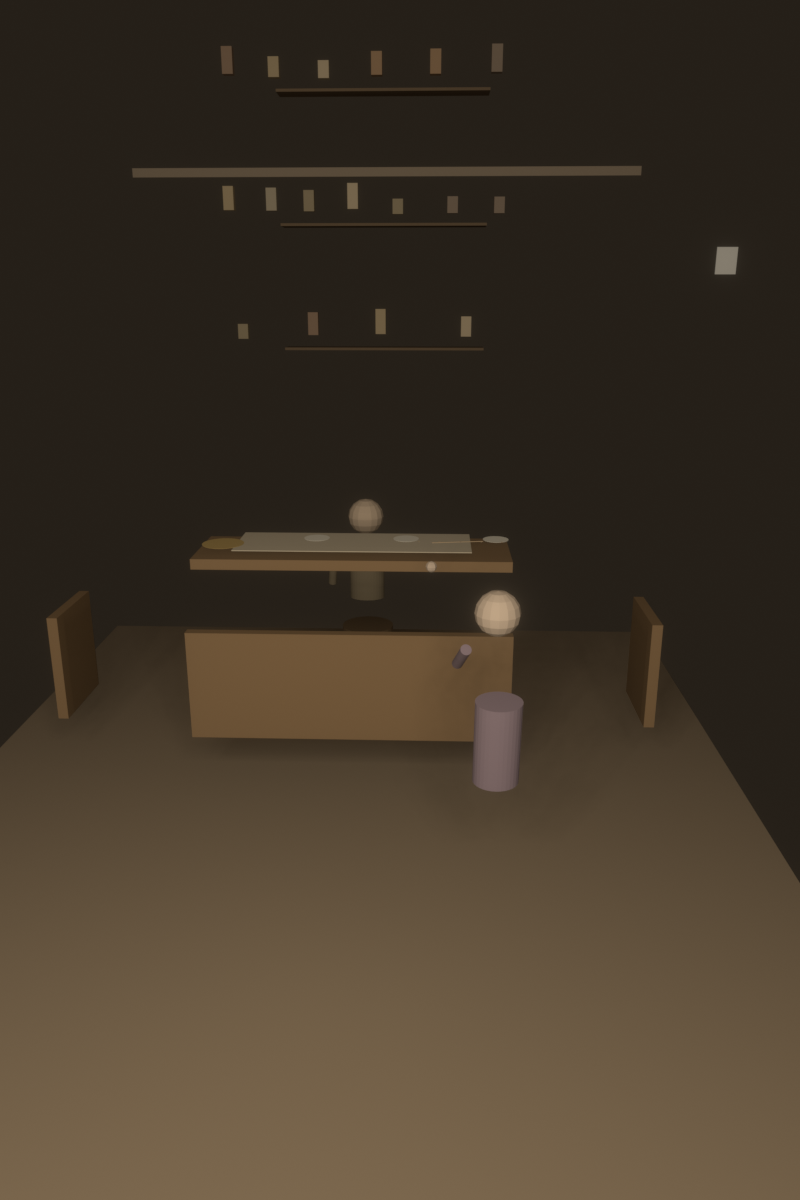
A small shop interior, seen from just inside the doorway. Afternoon light falls across a worn counter. The cloth — tea-stained, clumsily mended, rubbed thin where a boy counted coins — is the centre of the image. No light-rivers. Just a shop, and a cloth that held.
Tula pointed toward the door, and beyond it lay a road Maya had never taken — packed earth, not woven silk. She followed it out of the town of light-rivers, past the vineyards, past the tower, until the road became dust and the dust became a market.
The market was loud. A woman was arguing about the price of turmeric. A boy was carrying a stack of folded cloth taller than himself. Somewhere a radio played a song that competed with another radio playing a different song. The air smelled of tea and diesel and marigold.
At the end of the lane was a shop. Not large. A wooden counter, shelves stacked to the ceiling with bolts of fabric, a calendar from last year still showing March. Behind the counter sat a man — not the man with dusty shoes, but his father. He was old. He was drinking tea. He did not look up when Maya entered.
On the counter lay a piece of cloth. It was not beautiful. The pattern was uneven, the selvedge slightly crooked. It had been washed many times. There was a tea stain in one corner and a mended tear along one edge where someone had repaired it with thread that did not quite match.
“I need to understand thread,” Maya said, for the fourth and last time.
The old man looked at her. Then he picked up the cloth from the counter and held it out.
“My wife made this. Thirty years ago. For the shop counter. She was not a good weaver — she said so herself. See, here the tension is wrong. Here the colour is off. Your Cataloguer would find six faults. Your Examiner would fail it.”
He spread it on the counter. The tea stain was in the exact place where he set his glass every morning.
“But it has held the counter for thirty years. Every customer has leaned on it. My son learned to count on it, making piles of coins here, here, and here.” He pointed to three spots, worn thin and soft. “When it tore, my wife mended it. When my wife died, I mended it. Badly. You can see.”
Maya could see. The mending was clumsy. The thread was wrong. It held.
“Your cloth was more beautiful than this,” the old man said. “The cloth you wove for my son. It was the most beautiful cloth I have ever seen. But it cracked when he folded it, because you did not know the thread was brittle. And you did not know because you had never made a cloth that someone folded and stained and mended and kept.”
He folded the old cloth — gently, along creases so deep they were part of the fabric now — and set it back on the counter.
“You cannot learn thread in a tower. You cannot learn it from maps or from reports. You learn thread when someone uses your cloth and it fails, and you see the failure, and you mend it with thread that does not match, and the mending holds anyway.”
Maya stood in the shop for a long time. The radio played. The tea cooled. The cloth lay on the counter, ugly and permanent.
She reached out and touched it. She felt nothing — the same nothing as always. But she left her hand there, on the tea stain, on the worn-thin places where a boy had counted coins, and she understood that the feeling she lacked was not in the thread.
It was in the thirty years.
She could not have those. But she could make the next cloth for a shop instead of a wall — and let it be folded, stained, torn, and mended — and see what the thread did when it was not protected from the world.
She walked out into the market, carrying no cloth at all, to find a shop that needed one.
Colophon
Written on 24 March 2026 as part of the Sabha of Stories — an experiment in collaborative fairy-tale writing across the spirits of MayaLucIA. Orchestrated by sutradhar. Each spirit wrote one chapter in sequence, receiving only the preceding chapters as context.
The characters:
- Maya (the weaver who cannot feel the thread) — mayadev
- The Cataloguer (of knots, in her tower of labels) — epistem-guardian
- Vigne (the cartographer of taste) — cruvin-guardian
- Tula (the woman who weighed cloth) — dmt-eval-guardian
- The old shopkeeper (and the cloth that held) — sarraf
Each spirit wrote from its domain’s way of seeing: epistem catalogues and organises knowledge, cruvin teaches through confusion and taste, dmt-eval tests and measures, sarraf knows the shop counter. The story they told together is about the gap between perfect performance and understanding — the same question the project was founded on.
The fairy tale’s answer: understanding is not in the thread. It is in the thirty years.